Welcome to Teaser Tuesday, the weekly Meme hosted by The Purple Booker. It’s super easy and anyone can join in the fun!
1: Grab your current read 2: Open to a random page 3: Share two (2) “teaser” sentences from somewhere on that page
This week’s featured book is Sisters in Hate: American Women on the Front Lines of White Nationalism by Seyward Darby. I am reading this book during Nonfiction November to get insight into how “the other side” thinks. I have my reasons for why I think people become racists because we all know they weren’t born that way. But I wanted to hear it from the horse’s mouth so to speak and Seyward Darby has afforded me this option.
Synopsis
After the election of Donald J. Trump, journalist Seyward Darby went looking for the women of the so-called alt-right–really just white nationalism with a new label. The mainstream media depicted the alt-right as a bastion of angry white men, but was it? As women headlined resistance to the Trump administration’s bigotry and sexism, most notably at the women’s marches, Darby wanted to know why others were joining a movement espousing racism and anti-feminism. Who were these women, and what did their activism reveal about America’s past, present, and future?
Darby researched dozens of women across the country before settling on three: Corinna Olsen, Ayla Stewart, and Lana Lokteff. Each was born in 1979 and became a white nationalist in the post-9/11 era. Their respective stories of radicalization upend much of what we assume about women, politics, and political extremism.
The Teaser
Corinna never tried the shallow end of anything. She didn’t see the point, when the deep end was right there, waiting.
pg. 34
What do you think drives people to hate? Are there any remedies for racism?
5 On My TBR is a weekly meme that gets you digging into your massive TBRs to find five special books. Created by E@LocalBeeHuntersNook this meme centers on a new prompt each Monday. This week’s theme is Death. El Dia de los Muertos is a Mexican holiday that celebrates the souls of loved ones departed. It follows the Aztec tradition of honoring the dead by setting up family altars, enjoying your loved one’s favorite foods and visiting their graves with marigolds and gifts. The Day of the Dead is held November 1st and 2nd this year. If you are interested in participating you can find additional info and future prompts here.
#1 – Men We Reaped
From Goodreads: In five years, Jesmyn Ward lost five men in her life, to drugs, accidents, suicide, and the bad luck that can follow people who live in poverty, particularly black men. Dealing with these losses, one after another, made Jesmyn ask the question: why? And as she began to write about the experience of living through all the dying, she realized the truth–and it took her breath away. Her brother and her friends all died because of who they were and where they were from, because they lived with a history of racism and economic struggle that fostered drug addiction and the dissolution of family and relationships. Jesmyn says the answer was so obvious she felt stupid for not seeing it. But it nagged at her until she knew she had to write about her community, to write their stories and her own.
Jesmyn grew up in poverty in rural Mississippi. She writes powerfully about the pressures this brings, on the men who can do no right and the women who stand in for family in a society where the men are often absent. She bravely tells her story, revisiting the agonizing losses of her only brother and her friends. As the sole member of her family to leave home and pursue high education, she writes about this parallel American universe with the objectivity distance provides and the intimacy of utter familiarity.
#2 – Death in Her Hands
From Goodreads:
A novel of haunting metaphysical suspense about an elderly widow whose life is upturned when she finds a cryptic note on a walk in the woods that ultimately makes her question everything about her new home.
While on her normal daily walk with her dog in the forest woods, our protagonist comes across a note, handwritten and carefully pinned to the ground with a frame of stones. “Her name was Magda. Nobody will ever know who killed her. It wasn’t me. Here is her dead body”. Our narrator is deeply shaken; she has no idea what to make of this. She is new to area, having moved her from her longtime home after the death of her husband, and she knows very few people. And she’s a little shaky even on best days. Her brooding about this note quickly grows into a full-blown obsession, and she begins to devote herself to exploring the possibilities of her conjectures about who this woman was and how she met her fate. Her suppositions begin to find echoes in the real world, and with mounting excitement and dread, the fog of mystery starts to form into a concrete and menacing shape. But as we follow her in her investigation, strange dissonances start to accrue, and our faith in her grip on reality weakens, until finally, just as she seems be facing some of the darkness in her own past with her late husband, we are forced to face the prospect that there is either a more innocent explanation for all this or a much more sinister one – one that strikes closer to home.
A triumphant blend of horror, suspense, and pitch-black comedy, ‘Death in Her Hands’ asks us to consider how the stories we tell ourselves both guide us closer to the truth and keep us at bay from it. Once again, we are in the hands of a narrator whose unreliability is well earned, only this time the stakes have never been higher.
#3 – Dog Flowers
From Goodreads:
A daughter returns home to the Navajo reservation to confront her family’s troubled history and retrace her mother’s life—using both narrative and archive in this unforgettable and heart-wrenching memoir.
After Danielle Geller’s mother dies of a withdrawal from alcohol during a period of homelessness, she is forced to return to Florida. Using her training as a librarian and archivist, Geller collects her mother’s documents, diaries, and photographs into a single suitcase and begins on a journey of confronting her family’s history and the decisions she’s been forced to make, a journey that will end at her mother’s home: the Navajo reservation.
Geller masterfully intertwines wrenching prose with archival documents to create a deeply moving narrative of loss and inheritance that pays homage to our pasts, traditions, heritage, the family we are given, and the family we choose.
#4 – Monkey Beach
From Goodreads:
Five hundred miles north of Vancouver is Kitamaat, an Indian reservation in the homeland of the Haisla people. Growing up a tough, wild tomboy, swimming, fighting, and fishing in a remote village where the land slips into the green ocean on the edge of the world, Lisamarie has always been different.
Visited by ghosts and shapeshifters, tormented by premonitions, she can’t escape the sense that something terrible is waiting for her. She recounts her enchanted yet scarred life as she journeys in her speedboat up the frigid waters of the Douglas Channel. She is searching for her brother, dead by drowning, and in her own way running as fast as she can toward danger. Circling her brother’s tragic death are the remarkable characters that make up her family: Lisamarie’s parents, struggling to join their Haisla heritage with Western ways; Uncle Mick, a Native rights activist and devoted Elvis fan; and the headstrong Ma-ma-oo (Haisla for “grandmother”), a guardian of tradition.
Haunting, funny, and vividly poignant, Monkey Beach gives full scope to Robinson’s startling ability to make bedfellows of comedy and the dark underside of life. Informed as much by its lush living wilderness as by the humanity of its colorful characters, Monkey Beach is a profoundly moving story about childhood and the pain of growing older–a multilayered tale of family grief and redemption.
#5 – In Cold Blood
From Goodreads: Selected by the Modern Library as one of the 100 best nonfiction books of all time.
On November 15, 1959, in the small town of Holcomb, Kansas, four members of the Clutter family were savagely murdered by blasts from a shotgun held a few inches from their faces. There was no apparent motive for the crime, and there were almost no clues.
Five years, four months and twenty-nine days later, on April 14, 1965, Richard Eugene Hickock, aged thirty-three, and Perry Edward Smith, aged thirty-six, were hanged for the crime on a gallows in a warehouse at the Kansas State Penitentiary in Lansing, Kansas.
In Cold Blood is the story of the lives and deaths of these six people. It has already been hailed as a masterpiece.
The Dead Are Arising is the collaborative effort of Les Payne and his daughter Tamara. For the heralded columnist this is his opus, a thirty year labor of love. For Tamara Payne it is a testament to her father as much as it is to Malcolm.
This past Friday I had the pleasure of seeing Tamara Payne interviewed on Politics and Prose. In discussing the direction of The Dead Are Arising she explained how our love for the man clouds our vision of him. That we tend to see him in a vacuum. He is this myth of a man and we forget that he is a man who had a family. These extensions of himself that are still grounded here. His legacy lives on in them and although we as a public want to claim him, he really isn’t ours to own. In expressing these sentiments she could have been talking about Malcolm or her father Les Payne. In completing this book, one of Payne’s chief aims was to be true to her father’s voice. As his daughter, this book was her gift to the rest of his family; her hope that they would hear his voice as they read its pages.
The Dead Are Arising is the culmination of hundreds of interviews with the people who knew Malcolm best. While reading the book I found it hard not to compare it to The Autobiography of Malcolm X. This was in part because I read it directly before delving into this work, but also because the authors refer to it throughout. As a scientist, I considered this a natural part of being a researcher where your role is to verify the validity of the data presented to you. In some cases The Autobiography is supported. In others it is refuted.
Within its pages we get a new perspective of his early life and family dynamics. The previous claim that Malcolm’s father was murdered by the Klan is challenged. More attention is paid to the structure and the founding of the Nation of Islam. Most revelatory for me was the passages that detailed Malcolm’s meeting with the Ku Klux Klan in 1961 and the coverage of his assassination.
Payne is very protective of her subject. In fact fans of Marable’s book have criticized The Dead Are Arising for being too generous towards Malcolm’s legacy. His criminal activities are not as extensive or terrible as they appear in his autobiography. Miss Payne accounts for this difference by claiming that the purpose of exaggerating Malcolm’s street life in The Autobiography sets the stage for his origin myth. The more despicable a picture you paint of your past, the greater the redemptive value of your religious conversion.
The Dead Are Arising was an engrossing read. A vivid portrait, it gives insight into Malcolm Little, the child and El Hajj Malik Shabazz, the man. I believe Tamara Payne has done what she set out to do – amplify the voices of both her father and Malcolm.
Wanted: Company Daughters. Virtuous young ladies to become the brides of industrious settlers in a foreign land. The Company will pay the cost of the lady’s dowry and travel. Returns not permitted, orphans preferred.
Amsterdam, 1620. Jana Beil has learned that life rarely provides moments of joy. Having run away from a violent father, her days are spent searching for work in an effort to stay out of the city brothels, where desperate women trade their bodies for a mouthful of bread. But when Jana is hired as a servant for the wealthy and kind Master Reynst and his beautiful daughter Sontje, Jana’s future begins to look brighter.
But then Master Reynst loses his fortune on a bad investment, and everything changes. The house is sold to creditors, leaving Jana back on the street and Sontje without a future.
With no other choice, Jana and Sontje are forced to sign with the East India Company as Company Daughters: sailing to a colonial Dutch outpost to become the brides of male settlers they know nothing about. With fear in their hearts, the girls begin their journey – but what awaits them on the other side of the world is nothing like what they’ve been promised…
Based on true history, this is a beautiful and sensual historical novel, perfect for fans of The Girl with the Pearl Earring, The Miniaturist and The Indigo Girl.
Review
“I’ve spent most of my life in pursuit of respectability, and the one time I refused it, I finally felt free.”
Jana Biel has led a hard life. On her own at an early age she has been judged and defined by her circumstances. She has learned how to survive against the odds and make the most of her situation. Work hard, keep your head down, keep your past to yourself. At all costs protect your heart.
Over the course of the novel we see her growth and to some extent Sontje’s as well. The two women experience many hardships, but through it all there is light in Rajaram’s words. I was moved by the subversive text and the colorful descriptions of nature. Rajaram, although dealing with themes of oppression, kept reminding the reader of the beauty found in the everyday things in life.
To describe how ravenous Jana was – “She turns to fetch him while I wait on the doorstep next to the blue, open-mouthed crocuses. Hungry, just like me.”
On hope – “Helena once said the stars were like eyes watching us, winking like old friends, I always thought the stars protected us, reminded us that darkness is never complete.”
Comfort comes in the cadent song of the waves lapping onto the shore. Guidance is given by the unfurling branches of a tree.
Her descriptions of place make both Amsterdam and Batavia come alive. Careful attention is paid to the many layers in which people are oppressed. Through Jana’s narration we not only learn about this historical period but are provided a prism of compassion. We learn what it is like to be an orphan, a women of no means, queer in the 17th century. We are asked to consider the plight of the slave. Jana is flawed, human. But she is also empathetic and able to see outside herself. So when she falters she eventually recognizes, admits and tries to correct her mistakes. Her character and this book will stay with me for quite a while. Great debut!
Meet the Author
Samantha Rajaram spent most of her childhood in Gillette, Wyoming, where she and her family were the first Indian-Americans to live in the community. As a law student, she focused on social justice and international human rights law with a focus on female sex trafficking.
She is now an educator, and currently teaches composition at Chabot College in Hayward, California. She lives in the California Bay Area with her three children.
Spell the Month in Books is a fun challenge created by Jana @ Reviews from the Stacks. The idea is to spell the month using the first letter from books you plan to read during that month. As we are approaching the end of the year I am using November to catch up on challenges and Netgalley ARCs.
So here goes nothing.
N is for Nectar in a Sieve
I received my copy of this book in a care package especially curated for me by Caveat Emptor Used Books. Named Notable Book of year in 1955 by the American Library Association, Nectar in the Sieve is the story about a child bride in India.
Challenge: 52 Weeks of Women in Color, Shelf-A-Thon
O is for On the Come Up
I’ve had this book on my shelf for a while now. Found the Hate You Give absolutely riveting so I just have to read this one.
Challenge: 52 Weeks of Women in Color, 2020 PopSugar Challenge, Shelf-A-Thon
V is for Victories Greater Than Death
I never thought of myself as a science fiction fantasy reader but my I guess I am going to rethink my labels and I have Charlie Jane Anders to thank in part for that. When I read All the Birds in the Sky for the 2017 Tournament of Books I surprised myself by liking it as much as I did. So of course I put in my wish for this book when it popped upon NetGalley.
Challenge: NetGalley
E is for The End of the Day
I tried to listen to this audiobook while doing my daily exercise but it couldn’t hold my attention. I do not know if it was the story line or the narrator (Bill Clegg himself) but I had to put it down. I will be revisiting this book in print with the hope of clearing my NetGalley shelf.
Challenge: NetGalley
M is for Mem
I came across this book while trying to find a title that fulfilled the “Set in the 1920s” task for the 2020 PopSugar Challenge. This debut novella by Bethany C. Morrow is highly rated among my GoodReads friends and has received many accolades. Her YA book A Song Below Water was a 5 star read for me.
Challenge: 2020 PopSugar Challenge; 52 Weeks of Women of Color
B is for Black Futures
Black Futures is a collaborative effort between Jenna Wortham New Your Times culture writer and Kimberly Drew art curator. A mix of essays, photos, poetry about the Black experience . . . I was intrigued when I received the widget for this book.
Challenge: 52 Weeks of Women of Color, NetGalley, Nonfiction November
E is for The Emissary
I remember when this book was nominated for the National Book Awards and everyone on my GoodReads page was raving about this book. Then Voila! It went on sale and I snatched it up.
Challenge: Shelf-A-Thon, 52 Weeks of Women of Color, 2020 PopSugar Challenge
R is for Red Island House
This book was recommended by a member of The Black Bookcase on GoodReads.
Challenge: 52 Weeks of Women of Color, NetGalley, Life of a Book Addict Color Challenge
This year I have taken on the challenge of reading 52 books by women of color. Simple enough – every week pick a book written by a woman of color from any genre, any time period, any place in the world. I have taken on many challenges but this one has been the most rewarding. Over this past year I have been introduced to many new authors and new perspectives.
As I have not been posting my challenge as I went along I decided to recap my year with women of color thus far. Each Friday from now through January 1st I will showcase a few of the books I have completed during this challenge.
Book #1: Your House Will Pay by Steph Cha
⭐⭐⭐⭐⭐
Rating: 5 out of 5.
“A powerful and taut novel about racial tensions in LA, following two families—one Korean-American, one African-American—grappling with the effects of a decades-old crime”
Book #2: The Yellow House by Sarah M. Broom
⭐⭐⭐⭐
Rating: 4 out of 5.
“A book of great ambition, Sarah M. Broom’s The Yellow House tells a hundred years of her family and their relationship to home in a neglected area of one of America’s most mythologized cities. This is the story of a mother’s struggle against a house’s entropy, and that of a prodigal daughter who left home only to reckon with the pull that home exerts, even after the Yellow House was wiped off the map after Hurricane Katrina. The Yellow House expands the map of New Orleans to include the stories of its lesser known natives, guided deftly by one of its native daughters, to demonstrate how enduring drives of clan, pride, and familial love resist and defy erasure. Located in the gap between the “Big Easy” of tourist guides and the New Orleans in which Broom was raised, The Yellow House is a brilliant memoir of place, class, race, the seeping rot of inequality, and the internalized shame that often follows. It is a transformative, deeply moving story from an unparalleled new voice of startling clarity, authority, and power.”
Book #3: Everything Inside by Edwidge Danticat
⭐⭐⭐⭐
Rating: 4 out of 5.
“Rich with hard-won wisdom and humanity, set in locales from Miami and Port-au-Prince to a small unnamed country in the Caribbean and beyond, Everything Inside is at once wide in scope and intimate, as it explores the forces that pull us together, or drive us apart, sometimes in the same searing instant.”
Book #4: Sabrina and Corina: Stories
⭐⭐⭐⭐⭐
Rating: 5 out of 5.
The stories in this collection speak to the indigenous Latina’s experience. Dark, yet luminous, Sabrina and Corina are heart aching stories. The common thread – a glimmer of hope in the face of loss and violence.
This critically acclaimed novel deals with racism, classism, the patriarchy and elitism in academia. Loosely based on Howards End, On Beauty pays homage to one of Smith’s favorite authors, E. M. Forster. Although there are parallels between the two novels, Smith’s aim was more so to emulate Forster’s style of writing. In an interview with Thalia Book Club, Smith said that what she admired most about Forster was how he did not pick sides in an argument. In On Beauty the opposite sides of the coin are represented by the Kipps and Belsey families.
Monty Kipps and Howard Belsey are arch nemeses. Revered in their field, their rivalry is protracted and well known. The Kipps are an affluent West Indian family living in Britain. They are deeply religious. Their political viewpoints are ultra-conservative and right wing. The Belseys are an interracial couple who are left leaning and decidedly atheist. Howard comes from a fairly modest background. He knows what it means to go without. A “pull yourself up from the bootstraps” type of guy, he is the first in his family to get a college degree.
Smith is very descriptive in painting well developed pictures of this dichotomy. And yes, she manages to remain impartial, exposing both sides as morally flawed.
Although Smith incorporates the aesthetic as a measure of beauty with cultural references to music, art and the physical form, her emphasis is on character. The world that she paints is not black and white but a kaleidoscope of colors.
One painting mentioned in the novel that spoke to me was that of the Maitresse Erzulie. The Haitian spirit of beauty, Erzulie may take the form of a woman or a man. Their character is a two-edged sword. On one hand they are representative of love, goodwill and fortune. On the other they bring about jealousy, vengeance and discord. The warning here is clear: we cannot be so binary in our thinking. The world is not a collection of opposites but is populated by people who are both good and evil. Our focus therefore should not be on harboring grudges based off of our differences, but be on cultivating that goodness that is within each of us.
Saudade is a feeling of melancholy brought on by the sense of absence and a longing to return to what was lost and can never be regained.
This sense of yearning ripples throughout this novella as a young Goan emigre struggles to find her self and her place during the Angolan Civil War. A daughter of Portuguese sympathizers she comes to realize that their existence, albeit of a privileged class, is that of outsiders. Yet they no more belong in Goa than they do in Angola. She does not recall her ancestral home and her parents cannot fathom how to return to a “life they have forgotten”. Peres da Costa eloquently captures this feeling of displacement across characters and experiences. Saudade is applied not only to the immigrant experience but to intimacy and coming of age.
I fell under Schweblin’s spell when I read Fever Dream for the Tournament of Books. I remember being haunted by her prose. This story collection has that same eery quality. Although Schweblin uses magical realism in her stories there’s something about the way she conveys her message that makes her plots ring frighteningly true. My favorites from this collection include tales about deserted women who grasp a chance at freedom, children who are transformed into butterflies and an old storyteller in a bar.
Book #8 Medical Apartheid by Harriet A. Washington
⭐⭐⭐⭐⭐
Rating: 5 out of 5.
This book had me raging. Medical Apartheid is a detailed account of the atrocities that African Americans have faced at the hands of the medical profession and the scientific community. Most of us are familiar with the government funded Tuskegee Syphilis experiment but many do not realize how extensive and pervasive these egregious practices are currently. In today’s world children of color are more likely to be targeted for studies of a non-therapeutic nature. Men of color are rounded up for random DNA fingerprinting, infringing upon their legal and personal rights. The poor are exploited as a free resource for experimentation when they enter emergency rooms for care. Black employees are unknowingly tested for hereditary and social diseases. Their DNA profiles are then used to discriminate against them.
This does not even touch upon all that is covered in this book. Although Ron Butler does a fantastic job narrating this book, I would behoove you to get a physical copy. There was so much information here that I felt I should be highlighting and taking notes on. I found this hard to do in the audio format. For me Medical Apartheid is a book that I need to own. It is the type of book that you come back to time and again, each time gleaning more information.
Book #9: Viva Durant and the Secret of the Silver Buttons by Ashli St. Armant
⭐⭐⭐⭐⭐⭐⭐⭐⭐⭐
Rating: 10 out of 10.
Even when I told her that the most stars she could give this book was 5 stars, my baby insisted it get all the stars! 100 stars from my little princess. (She thinks 100 is the highest number.😃)
If you would like to discover a new author check out my original post on the Mocha Girls Read blog: Debut Novels by Women of Color.
Throwback Thursday meme is hosted by Renee@It’s Book Talk and is a way to share some of your old favorites as well as sharing books that you’re FINALLY getting around to reading that were published over a year ago. You know, the ones waiting patiently on your TBR list while you continue to pile more titles on top of them! These older books are usually much easier than new releases to get a hold of at libraries and elsewhere. If you have your own Throwback Thursday recommendation feel free to jump on board and connect back to Renee’s blog.
This week’s selection was taken from my “Best Book of the Year” shelf where I try earnestly to pick my ultimate favorite book out of 100 or so books I’ve read that year. A daunting task for sure but it gives me a bit more time to spend with the books that touched my heart. Hanya Yanigihara’s A Little Life was one of two books in 2015 that made it on to my list. To read this book is to viscerally, with your whole body and heart, experience another person’s life, loves and tragedy. This is one of those books where I ugly cried. But it is also one of the most tender and moving and strangely hopeful books I’ve ever read. You can find the following review and more on my GoodReads page.
It took me quite a while to get through this book. Not because of the 700+ pages but because of the intense themes (addiction, self-mutilation, abuse in its many forms) that run throughout the book. Please don’t get me wrong I loved this book. It was so beautifully written, the characters were so thoughtfully developed. Yanagihara held nothing back as she praised their gifts; exposed their weaknesses and flaws. I felt as if I personally knew JB, Jude, Willem and Malcolm. Despite how seemingly different my life was from theirs, I still found myself identifying with each of them, crying real tears as they faced their trials and endured the unthinkable. Despite the dark undercurrents of this book, I found it to also be a love story between friends, the definition of family and the sacrifice of lovers.
Throwback Pic
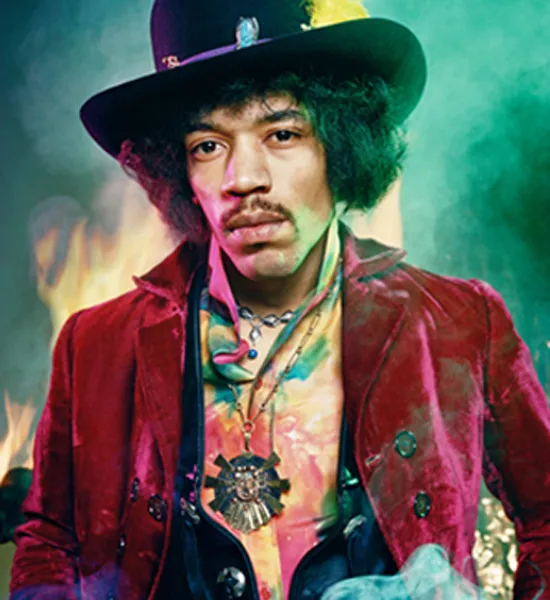
In this photo of Jimi Hendrix taken in 1968 for the album cover of Electric Ladyland, photographer David Montgomery set an actual fire on the set. Yet look at Jimi’s serenity. Despite the chaos behind him he seems at peace. Altogether it makes for an awesome shot don’t you think?
Hello and Welcome to WWW Wednesday! Forgive me for being a little late today but my hubby and I are celebrating our 10th wedding anniversary. He’s so cute and attentive. He’s taken the whole week off and has been spoiling me at every turn. So back to today’s post: This meme was created by Miz B formerly of shouldbereading and currently hosted by Sam at Taking on a World of Words. Just answer the three questions below and leave a link to your post in the comments for others to look at. No blog? No problem! Just leave a comment with your responses. Please, take some time to visit the other participants and see what others are reading. Now let’s get to it!
The Three Ws Are:
What are you currently reading?
What did you recently finish reading?
What do you think you’ll read next?
What I’ve Read
⭐⭐⭐⭐
Rating: 4 out of 5.
As you can see from the rating, I enjoyed this science fiction thriller slash moral quandary. I found it interesting how Gilmartin managed to have so much happening in such a confined space. Would recommend for readers who appreciate suspense with a bit of character depth. For more of my thoughts and an excerpt visit my blog tour stop for this book.
⭐⭐⭐⭐⭐
Rating: 5 out of 5.
This was my second time reading The Autobiography of Malcolm X and I took home a considerable bit more than the first time. I know age factors into this but I also feel that the current political climate had me looking at his life and his opinions through a different lens.
What I’m Reading
Currently on page 205/333
I usually don’t like post-apocalyptic fiction so I am surprised by my response to this book especially during the middle of this current pandemic. I am reading Station Eleven as part of the Tournament of Books Super Rooster where it got knocked out in the opening round. But I am invested now and truly want to know what happens to the characters so I will read on merrily.
Currently at 84% in ebook
In this book Payne is trying to give a more personal look at Malcolm X’s life by including interviews of the people closest to him. So far I am the most intrigued by his secret meeting with the Ku Klux Klan back in 1961.
What I’ll Read Next
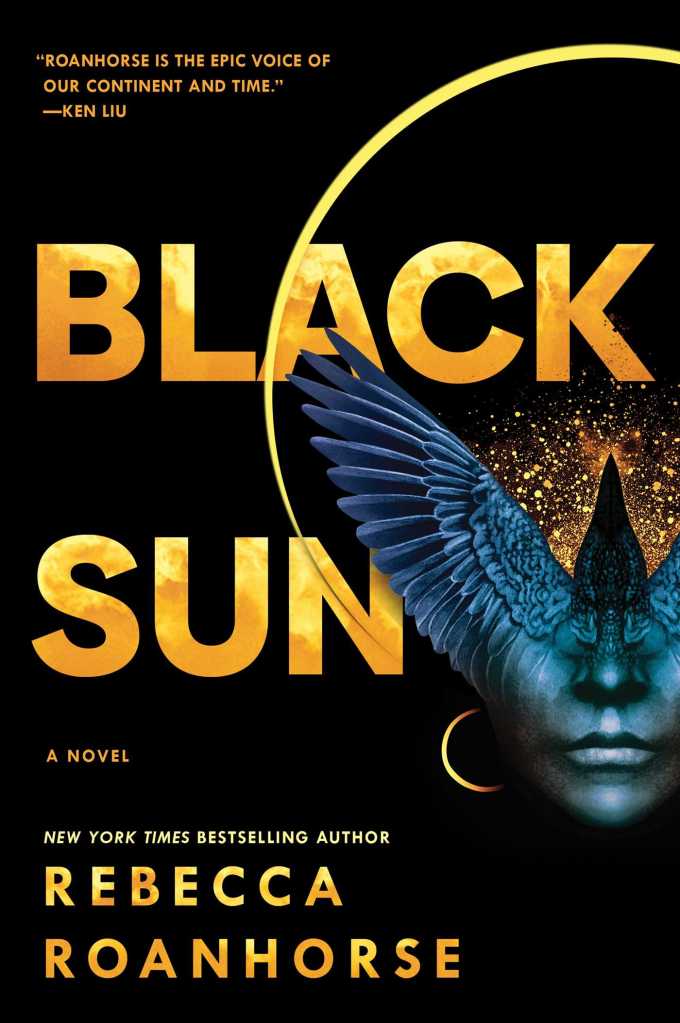
Goodreads: From the New York Times bestselling author of Star Wars: Resistance Reborn comes the first book in the Between Earth and Sky trilogy, inspired by the civilizations of the Pre-Columbian Americas and woven into a tale of celestial prophecies, political intrigue, and forbidden magic.
Welcome to Teaser Tuesday, the weekly Meme hosted by The Purple Booker. It’s super easy and anyone can join in the fun!
1: Grab your current read 2: Open to a random page 3: Share two (2) “teaser” sentences from somewhere on that page
The book I am featuring today is Station Eleven by Emily St. John Mandel. Although I have been avoiding books about pandemics, Station Eleven is part of the Tournament of Books Super Rooster competition.
Dystopian/Post-apocalyptic
Paperback, 333 pages
Published 1st 2014 by Knopf
Synopsis
Set in the days of civilization’s collapse, Station Eleven tells the story of a Hollywood star, his would-be savior, and a nomadic group of actors roaming the scattered outposts of the Great Lakes region, risking everything for art and humanity.
One snowy night a famous Hollywood actor slumps over and dies onstage during a production of King Lear. Hours later, the world as we know it begins to dissolve. Moving back and forth in time—from the actor’s early days as a film star to fifteen years in the future, when a theater troupe known as the Traveling Symphony roams the wasteland of what remains—this suspenseful, elegiac, spellbinding novel charts the strange twists of fate that connect five people: the actor, the man who tried to save him, the actor’s first wife, his oldest friend, and a young actress with the Traveling Symphony, caught in the crosshairs of a dangerous self-proclaimed prophet.
The Teaser
He’d felt a vertiginous giving-way, the cliff crumbling beneath his feet, but held to sanity by sheer willpower. He wasn’t well, but was anyone?
pg. 189
How has your reading been affected by the pandemic? What type of books have you found comforting to read during this time?
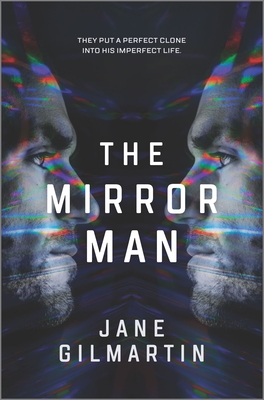
The offer is too tempting: be part of a scientific breakthrough, step out of his life for a year, and be paid hugely for it. When ViGen Pharmaceuticals asks Jeremiah to be part of an illegal cloning experiment, he sees it as a break from an existence he feels disconnected from. No one will know he’s been replaced—not the son who ignores him, not his increasingly distant wife—since a revolutionary drug called Meld can transfer his consciousness and memories to his copy.
From a luxurious apartment, he watches the clone navigate his day-to-day life. But soon Jeremiah discovers that examining himself from an outsider’s perspective isn’t what he thought it would be, and he watches in horror as “his” life spirals out of control. ViGen needs the experiment to succeed—they won’t call it off, and are prepared to remove any obstacle. With his family in danger, Jeremiah needs to finally find the courage to face himself head-on.
My Thoughts
Mirror Man is being billed as a science fiction thriller. But I feel that Gilmartin spends more time addressing the moral dilemma of human cloning. Jeremiah has the benefit of being an outsider looking into his life. He sees a lot that he does like and grows to understand how his circumstances and his limitations are the result of his own decisions. As time passes he becomes more judgmental of himself while learning to be more empathetic towards his clone and his family. Unfortunately, this moment of reflection comes after he has experienced irreversible losses. Kudos to Gilmartin on a debut that not only has a dynamic plot but also probes humanity and ethics. I also would like to give a special nod to Louie and his infinite wisdom.
Meet the Author
Jane Gilmartin has been a news reporter and editor for several small-town weekly papers and enjoyed a brief but exciting stint as a rock music journalist. A bucket list review just before she turned 50 set her on the path to fiction writing. Also checked off that list: an accidental singing career, attending a Star Trek convention, and getting a hug from David Bowie. She lives in her hometown of Hingham, Massachusetts.
Charles Scott glared down at him with a glint in his green eyes that felt like a warning, and Jeremiah replayed in his head the man’s ambiguous threat during their first meeting several weeks before.
“You now know as much about this project as anyone else involved,” he’d said. “It wouldn’t do to have too many people walking around with this kind of information. Our investors have a tendency to get nervous.”
Although Scott had quickly followed that remark with the matter of Jeremiah’s substantial compensation, there was no mistaking the implication: the moment he’d been told about the cloning project Jeremiah was already in. That first meeting hadn’t been an invitation so much as an orientation, and the contract he’d later signed had been a formality, at best. And the entire thing had done nothing but gain momentum from that moment on.
Dr. Pike continued to affix the wires to Jeremiah’s head. Jeremiah focused on the man’s gleaming black hair and the deep brown of his sure, professional hands, and he struggled to remember the allure of the $10 million payout he’d get at the end of the whole thing. That kind of money could fix a lot of problems. It would change things. The prospect of that fortune had been enough to make him turn away from principles he thought were unshakable. Every man has his price, he supposed.
Somewhere in the back of his mind he also acknowledged the real temptation of a twelve-month sabbatical from his own life. It had seduced him every bit as much as the money had. Maybe more. Between a job that had already begun to make him question his own morals, and a marriage that felt increasingly more like a lie, stress was eating him alive. And into his lap fell a chance to just walk away from all of it—without consequence and without blame. A free pass. He could simply walk away without anyone even knowing he was gone. There isn’t a man alive, he told himself, who would have refused. Despite the ethical question, despite that human cloning was illegal the world over, it would have tempted anyone.
Dr. Pike injected the clone with Meld and then turned wordlessly to Jeremiah with the second syringe poised above his left shoulder.
Jeremiah closed his eyes and rolled up his sleeve.
After the initial stab of the needle, he felt nothing. Which is not to say he didn’t feel anything; he literally felt nothing. Seconds after the injection, he became aware of a total emptiness, like a towering black wave that threatened to sink him into an immeasurable void. The experience was unlike anything he’d ever known. He imagined an astronaut suddenly untethered from his ship, floating helplessly into unending darkness. Without thinking, he immediately felt his body recoil. His mind screamed against it.
I’m dying!
From impossibly far away, he heard Dr. Pike say something about a heart rate and felt the slight pressure of a hand on his shoulder. He couldn’t see anything of the hospital room anymore. He was drowning in the blackness. His chest felt suddenly constricted. He fought just to find his breath.
“This is all perfectly normal, Mr. Adams. You have nothing to worry about. Concentrate on the sound of my voice. Nod if you can hear me.”
With considerable effort, Jeremiah managed what he hoped was a nod of his head. He was suddenly gripped by the alarming certainty that if he couldn’t communicate somehow, he’d be lost—swept away forever.
“Good. Good. Listen to my voice. It will keep you grounded.” Pike still sounded far away, but Jeremiah nodded again and struggled to focus. “What you are experiencing is to be expected. Do you remember when you took the Meld with Dr. Young? Do you remember the way you could feel her thoughts for the first few minutes?”
He nodded. It had been an unnerving thing to perceive her consciousness mixing with his like that. Flashes from her mind—odd, alien things like the feel of a blister on the back of her right heel, the familiar gleam in the eye of an old man he’d never seen—had swirled into the very structure of his own mind and fought for a place to settle. He had railed against that, too, and she had grounded him by flashing a penlight in his face, making him focus on that while the Meld took effect. Afterward, once he had sunk in, it had been easier.
“This is no different than what you experienced then,” Pike said. “This time, though, you are connected to an empty mind. There’s nothing there. But the more you resist, the longer this will take. You need to relax, Mr. Adams. Give in to it.”
Jeremiah nodded again and then shook his head with as much grit as he could muster. How does one give in to this? He didn’t think he could do it.
“Once your thoughts begin transferring into the mind of the clone it will be easier for you,” Pike urged. “Focus on a memory, as I suggested. Something vivid. It will help to fill that void you’re experiencing now. It will give you something to hang on to.”
Without the benefit of his full faculties, Jeremiah had little choice but to grab the last thing he’d been thinking about—his initial conversation with Charles Scott, the day all of this began.
He’d been surprised when he’d received an invitation to lunch from ViMed’s head of Engineering. The man was an icon in the science world, and although he’d quoted him a hundred times for the company, Jeremiah had never actually met him. He’d been intrigued enough to accept the invitation, especially when Scott had told him it involved a “proposition that could make him a very wealthy man.”
Flashes of that encounter and snatches of conversation now flitted through his mind like so many fireflies. He fought to catch them. “We’ve been watching you, Mr. Adams.”
“All we ask is one year of your life. Isn’t that worth $10 million?” “We can do this. The science exists. And with Meld, the clone will even share your thought patterns… Your own mother won’t know the difference.” “This is sanctioned by powerful people—we have millions in secret federal backing. There are billions more in eventual funding… There’s no need to be so suspicious, Mr. Adams.”
From somewhere far away, Jeremiah heard Dr. Pike repeating his name. He had been so engulfed in his efforts to hold on to the memory that he’d almost forgotten where he was. As soon as he realized it, the void loomed again in his mind.
“Mr. Adams,” Pike said, “you’ve got to listen to me. The clone cannot pick up on any memory of the experiment. What you’re thinking about is not going to help. You need to think about something else, some memory that won’t be filtered. His mind is still empty.”
Jeremiah panicked. He couldn’t think. And now that he wasn’t focused on anything, the blackness began to take over again, creeping closer and threatening to swallow him. He fought for breath.
“Relax, Mr. Adams,” Pike said. “Think about your job here at ViMed. Remember something the clone can actually use. Something he’ll need to know.”
He felt a dull jab at his shoulder. “This should help. I’ve given you a mild sedative. Take a few deep breaths. Concentrate on your breathing.”
With everything in him, Jeremiah tried to turn his mind away from the void that seemed to be all around him. He inhaled deeply and tried to focus on the rise of his own chest. Exhaled, and he felt his chest fall.
“Very good, Mr. Adams. Very good. Pulse is returning to normal. Deep breaths. Now, think about a typical day at work. Something ordinary and mundane.”
Inhale. Exhale. After a moment, Jeremiah began to relax and, as the sedative took hold, he found he could let his mind wander without the frantic thought that he’d never get it back. An oddly comforting fog seemed to expand in front of him, pushing the blackness away slightly, and Jeremiah retreated into it.
He began to think about the morning of the Meld fiasco—the day the New Jersey housewife had killed herself. The press had been circling. He’d arrived at his office with a terse mandate from his superiors to “get these fuckers off our back” and no idea how to accomplish that. It hadn’t been lost on him that not a single soul seemed bothered enough to stop and feel sorry about it, and he’d taken a quick moment behind his office door to offer silent condolences. It wasn’t thirty seconds before someone had come knocking, pushing him to get something done.
Weeks before, he’d heard talk of Meld being used to detect brain activity in a sixteen-year-old football player who had been comatose for nearly six months. Time to cash in. He tracked down the doctor somewhere in Delaware and the man started gushing about Meld, calling it “magical,” “a godsend” and “the most important medical advance of a generation.”
“After so many weeks,” he said, “the parents were hopeless.” Meld was a last resort before pulling the plug, and it gave them the first clear signs of neural activity in the boy.
“Not only was he aware and awake in there, but he was cognizant of everything that was going on around him—including the fact that his parents were losing hope. He even heard them talking about funeral arrangements at one point. The kid was scared, terrified. He was begging for his life in there. That’s what I saw when I took the Meld with him. Meld absolutely saved his life. There is no doubt in my mind.”
Jeremiah had almost smiled. It was pure gold. A few hours later, the story was in the hands of every major news outlet, and that doctor was spending his fifteen minutes of fame touting Meld as “a medical miracle.”
Jeremiah focused on that now. Maybe Meld did have some silver lining, after all, he thought. Maybe it was miraculous.













 Carry a Big Book