Tour the World in 30 Books Blog Tour: Sharks in the Time of Saviors

Hello Everyone and Welcome to my stop on Tour the World in 30 Books.

This blog tour is hosted by Sammie @ The Bookwyrm’s Den in support of increasing access to more diverse books. The CCPL—a small, rural library in an area with a high poverty rate and a very homogeneous population, where people rarely have the means to travel or experience new perspectives. However, the library doesn’t believe that should stop people from learning more about the world around them, so they’re running a Diverse Book Drive through the month of September in an attempt to bring the rest of the world to the county instead. With a focus on MG and YA books, the CCPL aims to expose especially its young patrons to new and diverse perspectives and cultures.


Sharks in the Time of Saviors

Kawaii Strong Washburn
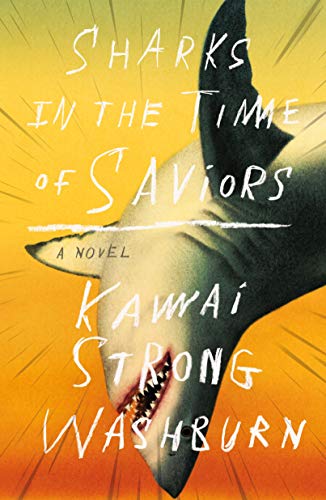
Sharks in the Time of Saviors is so far my favorite book of 2020. The story was moving, the characters memorable and the language was oh so beautiful. This is a book that will stay with me a long time and I will return to many times over.

Here are the top 5 reasons why you should read this soul stirring book.

Importance of Place

The Hawaii in Sharks in the Time of Saviors is not a place filled with tourists but one of a family with roots extending through the generations. It is beautiful and lush but Washburn focuses on the value of tradition and the price paid for modernity.

Legend

Hawaiian Legend of the Night Marchers

Legend in Sharks in the Time of Saviors is both mystical and miraculous. It is part of the family’s heritage as well as their future. The book opens up on the night of Noa’s conception with a sighting of Hawaii’s Night Marchers. By the end of the first chapter Noa becomes a living legend when he falls into the sea and is delivered back to safety in the mouth of a shark. He goes on to perform miracles.

As the family hero Noa struggles to save the world without losing himself, while his siblings try to assert themselves to remind others that they still exist.

Family

Family plays an important role in the book. Washburn spends a lot of time with the siblings and how they adjust to their new familial roles after the tragedy. Throughout the book he uses rotating perspectives to amplify their different voices. The characters are drawn with such depth that even through their flaws each of them has the power to carve out the family’s existence and save the others.

Beautiful imagery

Pele, Hawaiian Goddess of Volcanoes

“I’d dream of what must have been Hawaiian gods. Women as large and distant as volcanoes, their skin dark like pregnant soil, dolphin-kind bodies thick and slick and full of joyful muscle. Their hair tangled and tumbled down into the trees until I couldn’t tell the vines from their locks and their eyes golden or blue or green without white and smoldering. Everywhere they touched the land, the land grew into them, skin blending with earth, until you couldn’t find where one ended and the other began.”

Faith

Hina, Hawaiian Goddess of the Moon

We can put our faith in the supernatural or in each other. Here, faith extends from the gods to family and to our connection to the land. Salvation comes in the form of returning home and melding the present with the traditions of the past.


My Favorite Quote

“If a god is a thing that has absolute power over us, then in this world there are many. There are gods that we choose and gods that we can’t avoid; there are gods that we pray to and gods that prey on us; there are dreams that become gods and pasts that become gods and nightmares that do, as well. As I age I learn that there are more gods than I’ll ever know, and yet I have to watch for all of them, or else they can use me or I can lose them without even realizing it.”


How Can You Help?

Casey County Public Library Wishlists

You may also purchase one of the books featured on this tour from the wishlists below. Hardbacks are preferred but not required.

(If you order something from the Book Shop wishlist, please DM @srbetler on Twitter or email sammie@thebookwyrmsden.com, because I don’t believe that site automatically removes books from the wish list.)

Need more ideas? The library has a general Amazon wish list with suggestions too.


Blog Tour Schedule

Please take the time to visit these other stops on the tour. It’s a great way to show your support for this great cause and who knows you might just find your next great book love in the pages of these awesome books.

✦ September 1 ✦
Sammie @ The Bookwyrm’s Den – Introduction, Paola Santiago and the River of Tears
Leelynn @ Sometimes Leelynn Reads – Dating Makes Perfect

✦ September 2 ✦
Lauren @ Always Me – The Epic Crush of Genie Lo

✦ September 3 ✦
Toya @ The Reading Chemist – Felix Ever After

✦ September 4 ✦
Michelle @ Carry A Big Book – Sharks in the Time of Saviors

✦ September 5 ✦
Shenwei @ READING (AS)(I)AN (AM)ERICA – The Astonishing Color of After

✦ September 6 ✦
Maria @ A Daughter of Parchment and Paper – Patron Saints of Nothing

✦ September 7 ✦
Bri @ Bri’s Book Nook – True Friends (Carmen Browne)

✦ September 8 ✦
Bec @ bec&books – Lobizona
Jorie @ Jorie Loves A Story – diverse TTT

✦ September 9 ✦
Sienna @ Daydreaming Book Lover – Loveless

✦ September 10 ✦
Kerri @ Kerri McBookNerd – Raybearer

✦ September 11 ✦
Noly @ The Artsy Reader – The Name Jar

✦ September 12 ✦
Jacob @ The Writer’s Alley – Forest of Souls

 September 13 ✦
Keri @ Are You My Book – The Tea Dragon Society

✦ September 14 ✦
Shannon @ It Starts at Midnight – The Space Between Worlds

✦ September 15 ✦
Melissa @ Ramblings of a Jedi Librarian – Girl in Translation

✦ September 16 ✦
Livy @ Shelves of Starlight – Clap When You Land

✦ September 17 ✦
Crystal @ Lost in Storyland – American Born Chinese

✦ September 18 ✦
Lili @ Lili’s Blissful Pages – A Wish in the Dark

✦ September 19 ✦
Leslie @ Books Are The New Black – The Poppy War

✦ September 20 ✦
Noura @ The Perks of Being Noura – Love From A to Z

✦ September 21 ✦
Crini @ Crini’s – A Pale Light in the Black

✦ September 22 ✦
Rachelle @ Rae’s Reads and Reviews – Dear Haiti, Love Alaine

✦ September 23 ✦
Dini @ DiniPandaReads – Wicked As You Wish

✦ September 24 ✦
Madeline @ Mad’s Books – Spin the Dawn

✦ September 25 ✦
Tessa @ Narratess – Brace Yourself

✦ September 26 ✦
Kimberly @ My Bookish Bliss – Truly Madly Royally

✦ September 27 ✦
Rena @ Bookflirting 101 – Anna K: A Love Story

✦ September 28 ✦
Susan @ Novel Lives – Burn the Dark

✦ September 29 ✦
Arina @ The Bookwyrm’s Guide to the Galaxy – A Song of Wraiths and Ruin

✦ September 30 ✦
Maya @ Awesome Reads – Jackpot

Blog Tour: Punching the Air

Synopsis

From award-winning, bestselling author Ibi Zoboi and prison reform activist Yusef Salaam of the Exonerated Five comes a powerful YA novel in verse about a boy who is wrongfully incarcerated. Perfect for fans of Jason Reynolds, Walter Dean Myers, and Elizabeth Acevedo.

The story that I thought

was my life

didn’t start on the day

I was born

Amal Shahid has always been an artist and a poet. But even in a diverse art school, he’s seen as disruptive and unmotivated by a biased system. Then one fateful night, an altercation in a gentrifying neighborhood escalates into tragedy. “Boys just being boys” turns out to be true only when those boys are white.

The story that I think

will be my life

starts today

Suddenly, at just sixteen years old, Amal’s bright future is upended: he is convicted of a crime he didn’t commit and sent to prison. Despair and rage almost sink him until he turns to the refuge of his words, his art. This never should have been his story. But can he change it?

With spellbinding lyricism, award-winning author Ibi Zoboi and prison reform activist Yusef Salaam tell a moving and deeply profound story about how one boy is able to maintain his humanity and fight for the truth, in a system designed to strip him of both.


Review

I can remember vividly the days surrounding the Central Park jogger case. I remember the collective fear that held New York City in a vice. The way the press preyed on our emotions with descriptions of roving gangs of teens “wilding out”. Five teens — black and brown — were accused of this depraved act. They were villainized. Trump took out a full page ad in the New York Times demanding the death penalty in their case. In the days the followed one person stood out for me. Yusef Salaam’s mother. Because of her stoicism. She never faltered. In the heat of the frenzy she boldly proclaimed her son’s innocence across her chest.

In the end the five would spend 6-13 years behind bars for a crime they did not commit.

Punching the Air is a collaboration between award winning author Ibi Zoboi and Exonerated Five member Yusef Salaam. It tells the story of a teenage boy Amal who has been wrongfully convicted of a crime. The book is a beautifully rendered piece that delves into the disenfranchisement of young black men.

“Locking you up isn’t enough
for them They will try to crush your spirit until
you’re nothing but —

Dust
we both say
together”

Written in verse, Punching the Air shows Amal whose name means hope draw strength through creativity. His poems and art are glimpses of freedom that give him hope to carry on.

” And what does dust do, Amal?
What did Maya Angelou say about dust?
Umi asks
It rises, I whisper”


“It was this one dude
who said that’s why we’re always
fucking up, we’re always making
mistakes
because ain’t no butterflies in the hood

See, if there were butterflies
we would have what’s called
the butterfly effect

A butterfly’s wings can
change the path of a storm

Something so small
can change
one big thing in the world
one big thing in the universe

If there are no butterflies here
no pretty little wings flapping in the
hood
then we can’t change a thing, he said

We’re the butterflies, I said
and the things we do are like wings”


Meet the Authors

Ibi Zoboi

Ibi Zoboi was born in Port-au-Prince, Haiti, and holds an MFA in writing for children and young adults from Vermont College of Fine Arts. Her novel American Street was a National Book Award finalist and a New York Times Notable Book. She is also the author of Pride and My Life as an Ice Cream Sandwich, a New York Times bestseller. She is the editor of the anthology Black Enough: Stories of Being Young & Black in America. Raised in New York City, she now lives in New Jersey with her husband and their three children.


Dr. Yusef Salaam

Dr. Yusef Salaam was just fifteen years old when his life was upended after being wrongly convicted in the “Central Park Jogger” case, along with four other boys who are now known as the Exonerated Five. Their story has been documented in the award winning film The Central Park Five by documentarians Ken Burns, Sarah Burns, and David McMahon and in Ava DuVernay’s highly acclaimed series When They See Us, one of Netflix’s most-watched original series of all time. Yusef is now a poet, activist, and inspirational speaker who lives in Atlanta, Georgia. He is the recipient of a Lifetime Achievement Award from President Barack Obama.

Blog Tour: Impersonation

Synopsis

Allie Lang is a professional ghostwriter and a perpetually broke single mother to a young boy. Years of navigating her own and America’s cultural definition of motherhood have left her a lapsed idealist. Lana Breban is a high-profile lawyer, economist, and advocate for women’s rights with designs on elected office. She also has a son. Lana and her staff have decided she needs help softening her image in the eyes of the public and that a memoir about her life as a mother will help.

Allie struggles to write Lana’s book as obstacles pile up: not enough childcare, looming deadlines, an unresponsive subject, an ill-defined romantic relationship on the verge of slipping away. Eventually, Lana comes to require far too much of Allie and even her son. Allie’s ability to stand up for herself and ask for all that she deserves will ultimately determine the power that she can wield over her own life.

With the satirical eye of Tom Perrotta’s Mrs. Fletcher and the incisiveness of Meg Wolitzer’s The Female Persuasion, acclaimed writer Heidi Pitlor tells a timely, bitingly funny, and insightful story of ambition, motherhood, and class. 


Review

Ghostwriter Allie is used to stepping into someone else’s shoes and wearing their identities for months at a time. This level of method acting or getting into her subject’s head is required for pulling off a convincing read in someone else’s voice. Unlike actresses however, Allie never gets to take the credit for her work. Some charismatic headliner or successful business woman gets to put their pretty picture on the cover of her books and watch their faces climb the best seller lists. But Allie does not care for the accolades. She just wants to make a good enough living to support her son Cass.

Writing for condescending and sometimes sexist stars can make her job frustrating at times, but Lana Breban, feminist advocate, might be her most challenging client yet. Known for her blue cropped hair and no-nonsense style, Lana is an immigrant who has made her place in the world and has fought for the rights of other women. Allie looks up to her but as she tries to gather personal information for her book, Lana is not very forthcoming. Now that Lana is running for Senate she is not sure if her brand of motherhood appeals to the masses. As she tries to soften her public image Allie’s humble life and experiences seem more of the stuff that voters would like.

Impersonation asks a lot of questions not just about politics, but how we view women and how we judge mothers. Pitlor does start the conversation about modeling feminism for our younger generation in the hope to raise more compassionate and loving men for tomorrow. In the book, Allie tackles with the limits imposed on children by the genderization of babies. She strives to raise Cass in a gender-neutral setting offering him traditionally “feminine” toys like dolls to play with alongside trucks and cars. She also allows Cass to wear clothing of different types and colors but recognizes that other parents are not so open to little boys in pink. Nor will these parents chastise their children for being cruel. Bad behavior is usually explained away as “boys will be boys”.

Although I do not not think everything about motherhood is a feminist discussion, I do feel that oftentimes people feel they have the right to assert themselves in personal matters that are none of their business.

To breast feed or bottle feed? Which is right is a decision made between that mother and that child. I’ve breastfed four children. One I was able to feed on demand. With another we only lasted two months before switching to formula only. A third child was nibbling on chicken bones by 4 months old. The last took to bottle and breast equally. It made him no nevermind how he was eating as long as he had some type of food in his mouth.

What is the right way to disciple your child? Do you give them time out, take away privileges or use rewards as incentive for good behavior? What works with one child does not always work with the next. Nor does it work with the same child day in and day out. Whether she has one child or five, every mom needs to be quick witted and carry many tools in her arsenal.

Impersonation is in part an ode to the many hats that women wear as we make our way through American society. Daughter. Wife. Single mother. Career woman. Sometimes we wear a multitude of titles and they all carry a heavy weight loaded with the expectations of others. Ultimately, it is up to us to decide what works best for our own happiness and learn to advocate for what we want. Don’t apologize for who you are just because it does not fit the definition of who someone else wants you to be.


Meet the Author

Heidi Pitlor is the author of the novels The Birthdays and The Daylight Marriage. She has been the series editor of The Best American Short Stories since 2007 and the editorial director of Plympton, a literary studio. Her writing has been published in the New York Times, the Boston Globe, the Huffington PostPloughshares, and the anthologies It Occurs to Me That I Am America: New Stories and Art and Labor Day: True Birth Stories by Today’s Best Women Writers. She lives outside Boston.


Buy Links

Blog Tour: A House is a Body

Synopsis

INTRODUCING A DAZZLING NEW LITERARY VOICE

In two-time O. Henry-prize winner Swamy’s debut collection of stories, dreams collide with reality, modernity collides with antiquity, myth with true identity, and women grapple with desire, with ego, with motherhood and mortality. In “Earthly Pleasures,” Radika, a young painter living alone in San Francisco, begins a secret romance with one of India’s biggest celebrities. In “A Simple Composition,” a husband’s moment of crisis leads to his wife’s discovery of a dark, ecstatic joy and the sense of a new beginning. In the title story, an exhausted mother watches, distracted and paralyzed, as a California wildfire approaches her home. With a knife blade’s edge and precision, the stories of A House Is a Body travel from India to America and back again to reveal the small moments of beauty, pain, and power that contain the world.

Review

A House is a Body is an intimate collection of stories that explores a range of human emotions, conditions and relationships. It is tender and riveting. The prose is simple yet searing. Even though each story embodied a different soul, together these stories came together to reveal a humanity that is full of beauty, hope and pain.

“She was like hearing your own heartbeat. If you stop for a minute and are entirely still you can hear it. All along she’s with you, but you never notice until you think to notice.”

In this passage Swamy is talking of mothers but in her intuitive way her female characters call to attention many nuanced perspectives of looking at the world.

“When he lifted his eyes to me for a moment I felt the wind knocked out: I was a bell, and he’d rung me.”

A House is a Body using electric prose and imagery to bring both the realistic and surreal alive. It is definitely worth your time to pick this book up and steep in its well of emotions.

Meet the Author

From the author’s website: “The winner of two O. Henry Awards, Shruti Swamy’s work has appeared in The Paris Review, the Kenyon Review Online, Prairie Schooner, and elsewhere. In 2012, she was Vassar College’s 50th W.K. Rose Fellow, and has been awarded residencies at the Millay Colony for the Arts, Blue Mountain Center, and Hedgebrook.

She is a Kundiman fiction fellow, a 2017 – 2018 Steinbeck Fellow at San Jose State University, and a recipient of a 2018 grant from the Elizabeth George Foundation.”

Buy Links

Blog Tour: Paris Never Leaves You

First, I would like to thank Clare Maurer and Maria Vitale at St.Martin’s Press for thinking of me when organizing this blog tour.

Synopsis

The war is over, but the past is never past …
 
Paris, 1944. Charlotte Foret is working in a tiny bookstore in Nazi-occupied Paris struggling to stay alive and keep her baby Vivi safe as the world around them is being torn apart. Every day they live through is a miracle until Vivi becomes gravely ill.  In desperation, Charlotte accepts help from an unlikely saviour – and her life is changed forever.
 
Charlotte is no victim – she is a survivor. But the truth of what happened in Paris is something she can never share with anyone, including her daughter. But can she ever really leave Paris behind – and survive the next chapter of her life?
 
Seamlessly interweaving Charlotte’s past in wartime Paris and her present in the 1950s world of New York publishing, Paris Never Leaves You is a heartbreakingly moving and unforgettable story of resilience, love – and impossible choices.

Review

Paris Never Leaves You is an historical novel about the German occupation of Paris during World War II. What stood out for me was that it showed the impact on civilians during a time of war. We see their daily struggle to get food and essentials. We understand their fears as their houses are no longer their homes, but instead commodities of war. Families are divided and move nightly to evade the German soldiers.

The effect of the war is palpable. Charlotte has lost a considerable amount of weight. Her father has fled the country. Her closest friend Simone has been arrested and her daughter Vivi is starving. And through all this a German soldier comes to her bookstore proffering food. At first she tells herself that she accepts his kindness out of necessity. Then she realizes that she has feelings for him that run deeper. She cannot admit or express how she truly feels. It seems like a betrayal. To her dead husband and to the people of Paris.

At the end of the war Charlotte and Vivi have both made it through. Their new lives in America are strained by the secrets of the past. Not only does survivor’s guilt weigh down heavily on Charlotte, but she also is ashamed of how she came to secure the life that she and Vivi now live.

I found the book slow going at first and had a hard time getting into it. When I read the blurb I thought it was going to be more about books because of the bookstore and publishing angles. However, I did appreciate learning another aspect of World War II that is rarely depicted in books. I never thought of a Jew serving in the German army or others using Jewish classification to escape war. I found this whole concept of “hiding in plain sight” intriguing and was touched by both Julian’s and Charlotte’s stories.

Meet the Author

Ellen Feldman, a 2009 Guggenheim fellow, is the author of Terrible Virtue, The Unwitting, Next to Love, Scottsboro (shortlisted for the Orange Prize), The Boy Who Loved Anne Frank (translated into nine languages), and Lucy. Her last novel, Terrible Virtue, was optioned by Black Bicycle for a feature film.

Ellen has lectured extensively around the country and in Germany and England, and enjoys talking to book groups in person, on the phone, or via the web.

She grew up in northern New Jersey and attended Bryn Mawr College, from which she holds a B.A. and an M.A. in modern history. After further graduate studies at Columbia University, she worked for a New York publishing house.

Ellen lives in New York City and East Hampton, New York, with her husband and a terrier named Charlie.

Where You Can Find Ellen

Buy Links

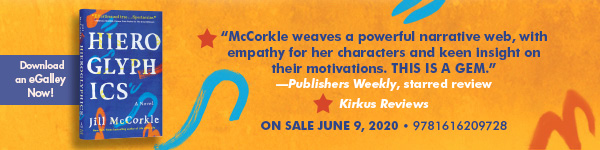
Blog Tour: Hieroglyphics

Synopsis

Lil and Frank married young, launched into courtship when they bonded over how they both—suddenly, tragically—lost a parent when they were children. Over time, their marriage grew and strengthened, with each still wishing for so much more understanding of the parents they’d lost prematurely.

Now, after many years in Boston, they have retired in North Carolina. There, Lil, determined to leave a history for their children, sifts through letters and notes and diary entries—perhaps revealing more secrets than Frank wants their children to know. Meanwhile, Frank has become obsessed with what might have been left behind at the house he lived in as a boy on the outskirts of town, where a young single mother, Shelley, is just trying to raise her son with some sense of normalcy. Frank’s repeated visits to Shelley’s house begin to trigger memories of her own family, memories that she’d rather forget. Because, after all, not all parents are ones you wish to remember.

Hieroglyphics reveals the difficulty of ever really knowing the intentions and dreams and secrets of the people who raised you. In her deeply layered and masterful novel, Jill McCorkle deconstructs and reconstructs what it means to be a father or a mother, and what it means to be a child piecing together the world all around us, a child learning to make sense of the hieroglyphics of history and memory.


Review

Hieroglyphics opens as a character study of three generations of people not necessarily connected by family, but related by home. Lil and Frank are an older couple returning to their hometown in the winter of their lives. Shelley is a single mother of two boys Jason and Harvey. She and Harvey live alone in Frank’s childhood home.

We get a very good sense of Lil through her collection of letters and odd bits of history that she leaves about the house. Of all the characters her voice was the one resonated with me the most. I felt nostalgic at times even though she is not of my generation nor is her story my story. I was just pulled in by the love that she showed her family, her inner strength and her loyalty.

Frank is an archaeologist who investigates “graves and caves” in search of clues of long gone civilizations. But the past that he is really trying to decipher is his own.

Shelley works as a stenographer who is beset by the current case that she is transcribing. It is a high profile murder case where she over identifies with the victim. As she listens to testimony it triggers flashbacks of her past traumas. This intense anxiety is causing her to reflect on different aspects of her life. Not only forcing her to revisit her mistakes of the past, but to also reevaluate her decisions as a parent.

Poor Harvey thinks their home is haunted. There is a ghost that lingers at night and causes him to wet the bed. He has a vivid imagination. When he puts on one of his fake mustaches he could be either a sentient adult or a superhero known as Super Monkey. His superpower is that he can talk serial killers out of doing wrong and turn them onto the path of all that is moral and good. All of these are symptoms of his overriding fears – his sensitivity over his cleft lip, his abandonment by his father and his awareness of his mother’s grief and distress.

When I was a student I found that picking a title that encapsulated the heart of my story was perhaps one of the hardest tasks of writing. So now as an adult whenever I read a book I try to figure out why the author chose the title and its significance. After reading Hieroglyphics I came up with two justifications for the name.

Hieroglyphics are an ancient code of pictures that tell a story. Each of the characters encode their experiences. Shelley uses shorthand while transcribing her cases. Harvey and his brother trade secrets in Klingon. Lil reminisces over her mother’s unique sort of jargon. She and Frank share secret words so if one dies first they can “send messages” through the living.

Hieroglyphics are a language that informs the past. Here the past can be bittersweet with characters at times examining their lives through experiences of death and catastrophe. As Lil helps her daughter prepare for her wedding she is reminded of her own. Although her own mother was taken before she wed Frank she feels blessed to share this moment with her daughter and remembers how tragedy brought her and Frank together.

Take your time reading this book. It is subtle. It is sublime. If I had to sum Hieroglyphics up in one sentence I would say that it was a heartfelt, bittersweet examination of the legacy we leave behind for those we love. Highly recommend.


Meet the Author

Jill McCorkle’s first two novels were released simultaneously when she was just out of college, and the New York Times called her “a born novelist.” Since then, she has published six novels and four collections of short stories, and her work has appeared in Best American Short Stories several times, as well as The Norton Anthology of Short Fiction. Five of her books have been New York Times Notable books, and her most recent novel, Life After Life, was a New York Times bestseller. She has received the New England Booksellers Award, the John Dos Passos Prize for Excellence in Literature, and the North Carolina Award for Literature. She has written for the New York Times Book Review, the Washington Post, the Boston GlobeGarden and Gun, the Atlantic, and other publications. She was a Briggs-Copeland Lecturer in Fiction at Harvard, where she also chaired the department of creative writing. She is currently a faculty member of the Bennington College Writing Seminars and is affiliated with the MFA program at North Carolina State University.


Buy Links

Blog Tour: Someone’s Listening

Synopsis

You’re not alone. Someone’s waiting. Someone’s watching…Someone’s listening.

In SOMEONE’S LISTENING (Graydon House Books; July 28; $16.99) Dr. Faith Finley has everything she’s ever wanted: she’s a renowned psychologist, a radio personality—host of the wildly popular “Someone’s Listening with Dr. Faith Finley”—and a soon-to-be bestselling author. She’s young, beautiful, and married to the perfect man, Liam.

Of course Liam was at Faith’s book launch with her. But after her car crashes on the way home and she’s pulled from the wreckage, nobody can confirm that Liam was with her at the party. The police claim she was alone in car, and they don’t believe her when she says otherwise. Perhaps that’s understandable, given the horrible thing Faith was accused of doing a few weeks ago.

And then the notes start arriving—the ones literally ripped from the pages of Faith’s own self-help book on leaving an abusive relationship. Ones like “Secure your new home. Consider new window and door locks, an alarm system, and steel doors…”

Where is Liam? Is his disappearance connected to the scandal that ruined Faith’s life? Who is sending the notes? Faith’s very life will depend on finding the answers.


Review

Faith Finley is a successful psychologist with her own radio show named “Someone’s Listening”. She has built a reputation for helping the abused escape from their dangerous relationships. Her whole world comes tumbling down when a former patient accuses her of sexual misconduct. Although this type of delusional behavior fits his pathology, doctor-patient privilege prevents Faith from using his diagnosis to defend herself. As the news outlets increase their coverage she sees bits of her life being wrestled away from her. So when her husband Liam disappears the night of her book signing it is no surprise that detectives assume he has flown the coop.

Her credibility shot, Faith knows that she is on her own. If she wants answers into Liam’s disappearance she needs to get them herself. Throughout her dogged pursuit Faith proves herself to be relentless and reckless. I struggled with her character at times. Even though I applauded her persistence, I felt that as an educated smart woman she made some really stupid decisions. When she started calling Carter after his accusations went live, I could have reached into the kindle and smacked her. I just felt like someone should have been there to knock some sense into her. But ultimately she chased down the leads that no one else would.

For a debut mystery novel, Seraphina Nova Glass does a fine job of introducing doubt into the cast of characters’s motives. She offers up many suspects to keep readers guessing. And I have to say, if a book gets you so invested in the character that you fell the need to intervene as you would on behalf of a friend that says a lot about the novel’s character development and relatability. I look forward to reading Seraphina Nova Glass’s next novel The Seduction which is scheduled to be released Summer 2021.


Meet the Author

Seraphina Nova Glass is a professor and Playwright-in-Residence at the University of Texas-Arlington, where she teaches Film Studies and Playwriting. She holds an MFA in playwriting from Smith College, and has optioned multiple screenplays to Hallmark and Lifetime. Someone’s Listening is her first novel.


Where You Can Find Her

Blog Tour: The Lives of Edie Pritchard

Synopsis

Everyone in Gladstone, Montana recognizes Edie as the smart, self-assured, beautiful wife to her high school sweetheart Dean. But they only see what they want to see. They don’t see the relentless pursuit of Edie by Dean’s
twin brother, Roy. Or Dean’s crippling insecurity in the face of Roy’s calm, easy charm. Edie’s relationship with the Linderman brothers reverberates through the years: from her conventional start as a young bride; to her second marriage to an explosively jealous man with a daughter caught in the middle; to her attempts to protect a granddaughter who is pursued by two lecherous boys. But despite it all, Edie remains strong and independent, no matter how many times her past attempts to claw its way back into her life. Triumphant, engaging, and deeply perceptive, THE LIVES OF EDIE PRITCHARD weaves a complex portrait of a woman determined to live on her own terms.


Review

The Lives of Edie Pritchard follows our heroine through three major periods of her life: during her twenties while she is married to her high school sweetheart, in the midst of her forties as she contemplates leaving her second marriage, and in her senior years as she tries to impart her wisdom to her granddaughter. Edie is an indelible character at any age and over the course of her lifetime we see how she holds onto her sense of self despite what others try to project on to her.

When I picked up this book I was curious how a man would handle the headspace of a woman. Would he understand the nuances of a woman navigating her way through a male dominated society? Would the novel address feminine sentiment in a way that was respectful and honest and true? Does Larry Watson get “it”? Although I do not think he entirely gets us, I did not find myself offended. Perhaps because I expected the book to be through a male lens, I was grateful that he showed her development over time. Watson’s writing is simply stated; cognizant of this woman’s singularity and sense of purpose.

One scene that really made an impression on me was where Edie is talking to Lauren and Roy about how girls in middle school perceive themselves and how their self esteem goes down just about the same time they start getting attention from boys. She asks them why they think this is the case and finally Roy has to admit that “It must be something about the way we look at you.”

This scene takes place when Edie is in her sixties and has come full circle. She has come to accept that people may have their own perceptions of you, that this sense of identity may be caused by false memory or long held views of what they think you should represent. But she is no longer bound to what other people need or want her to be.

When she was in her twenties an offhand comment from a little girl would have prompted her to examine her features and double check that she is not wearing too much makeup and contemplating her hairstyle. A plea to help make a car sale might have her unbuttoning her blouse. In each of these cases she self corrects, disgusted with herself for allowing others to impose their views on her.

By the time she reaches her forties she knows that with her beauty comes expectations from men — including her husband. Even though she wants change in her life, she does not want to forsake her identity to get it.

As a mature woman she is not only self aware, but she also has come to realize that we cannot control what others think of us:

“All of us are someone else in the eyes of others. And for all I know, maybe that other is as true, as real, as the person we believe we are. But the thing is, when you’re back home, you never have a chance to be someone other than who you were then. Even if you never were that person.”

Like Watson’s other novels The Lives of Edie Pritchard is reminiscent of place. Small town Americana comes alive in the form of Gladstone, Montana and is its own character in the book.

“It might not seem like much, this country. A few bare hills, each seeming to rise out of the shadow of the one behind it. Miles of empty prairie, and all of it, hill and plain, the color of paper left out in the sun. You might be out here alone someday with what you thought would be your life. And a gust of wind might blow your heart open like a screen door. And slam it just as fast.”


Meet the Author

Larry Watson is the author of several novels including MONTANA 1948, JUSTICE, WHITE CROSSES, and ORCHARD which have been optioned for film. LET HIM GO was made into a film starring Kevin Costner and Diane Lane and is due to be released this year. Watson’s fiction has been published in ten foreign editions, and has received prizes and awards from Milkweed Press, Friends of American Writers, Mountain and Plains Booksellers Association, Mountain and Plains Library Association, New York Public Library, Wisconsin Library Association, Critics’ Choice, and The High Plains Book Award.  He and his wife Susan live in Kenosha, Wisconsin. They have two daughters, Elly and Amy, and two grandchildren, Theodore and Abigail.

Special thanks to Sara Winston from Algonquin Books for bringing this book to my attention.

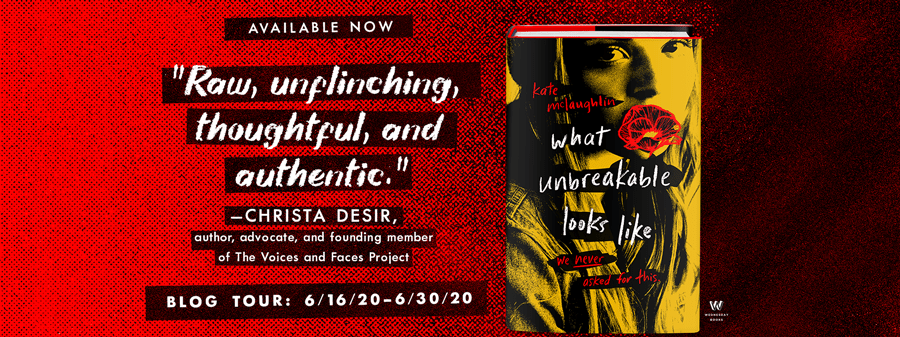
What Unbreakable Looks Like

Synopsis

Lex was taken–trafficked–and now she’s Poppy. Kept in a hotel with other girls, her old life is a distant memory. But when the girls are rescued, she doesn’t quite know how to be Lex again.

After she moves in with her aunt and uncle, for the first time in a long time, she knows what it is to feel truly safe. Except, she doesn’t trust it. Doesn’t trust her new home. Doesn’t trust her new friend. Doesn’t trust her new life. Instead she trusts what she shouldn’t because that’s what feels right. She doesn’t deserve good things.

But when she is sexually assaulted by her so-called boyfriend and his friends, Lex is forced to reckon with what happened to her and that just because she is used to it, doesn’t mean it is okay. She’s thrust into the limelight and realizes she has the power to help others. But first she’ll have to confront the monsters of her past with the help of her family, friends, and a new love.

Kate McLaughlin’s What Unbreakable Looks Like is a gritty, ultimately hopeful novel about human trafficking through the lens of a girl who has escaped the life and learned to trust, not only others, but in herself.


Review

What Unbreakable Looks Like was a heart wrenching punch to the gut. The topic of this novel is human trafficking. McLaughlin shows how young girls are sometimes seduced into bondage. “Mitch was there for me when no one else was. He took care of me. He sold me. Beat me. Told me I was beautiful and said I was an ugly bitch. He said he loved me . . . ” I cried when I read these words. I cried knowing that there are girls out there living in dysfunctional homes who are willing to accept this kind of “love” any kind of love. That they do not know their worth and have been neglected to the point that any attention is good attention. But McLaughlin also shows here that anybody can be trafficked and that this is happening right in our backyards in small town America. These men are predators; highly manipulative and skilled at grooming the young and impressionable. They have long arms and a lot of money backing these enterprises. In the book McLaughlin uses the website Stall313 to shine light on the real life fight to end online human trafficking. I have not been able to watch the documentary I am Jane Doe that inspired this book but I have viewed an interview with its director Mary Mazzio. I was utterly shocked by how deep this went and the responses of some politicians and judges. I found it frustrating that Backpage.com and other websites like it are able to use Section 230 as a legislative loophole to get around their complicity in human trafficking.


Meet the Author

KATE McLAUGHLIN likes people, so much so that she spends her days making up her own. She likes writing about characters who are bent, but not broken – people who find their internal strength through friends, strife and sometimes humor. When she’s not writing, she likes studying people, both real and fictional. She also likes playing board games with friends, talking and discovering new music. A proud Nova Scotian, she’ll gladly tell you all about the highest tides in the world, the magical creation known as a donair, and people who have sofas in their kitchens. Currently, she lives in Connecticut with her husband and four cats. She’s the author of What Unbreakable Looks Like.

Blog Tour: Red Sky Over Hawaii

Hello Everyone! Welcome to my blog! First I would like to thank Justine Sha for inviting me on this blog tour. Red Sky Over Hawaii is what I consider a comfort read. With a take home message about living in the moment and believing in magic it certainly warmed my heart.

I would recommend this book to anyone who likes happily-ever-afters and found families.


Book Synopsis

For fans of Chanel Cleeton and Beatriz Williams, RED SKY OVER HAWAII is historical women’s fiction set in the islands during WWII. It’s the story of a woman who has to put her safety and her heart on the line when she becomes the unexpected guardian of a misfit group and decides to hide with them in a secret home in the forest on Kilauea Volcano.

The attack on Pearl Harbor changes everything for Lana Hitchcock. Arriving home on the Big Island too late to reconcile with her estranged father, all she can do is untangle the clues of his legacy, which lead to a secret property in the forest on Kilauea Volcano. America has been drawn into WWII, and amid rumors of impending invasion, the army places the islands under martial law. When they start taking away neighbors as possible sympathizers, Lana finds herself suddenly guardian to two girls, as well as accomplice to an old family friend who is Japanese, along with his son. In a heartbeat, she makes the decision to go into hiding with them all.

The hideaway house is not what Lana expected, revealing its secrets slowly, and things become even more complicated by the interest of Major Grant Bailey, a soldier from the nearby internment camp. Lana is drawn to him, too, but needs to protect her little group. With a little help from the magic on the volcano, Lana finds she can open her bruised heart to the children–and maybe to Grant.

A lush and evocative novel about doing what is right against the odds, following your heart, and what makes a family.


About the Author

Sara Ackerman is the USA Today bestselling author of The Lieutenant’s Nurse and Island of Sweet Pies and Soldiers. Born and raised in Hawaii, she studied journalism and earned graduate degrees in psychology and Chinese medicine. She blames Hawaii for her addiction to writing, and sees no end to its untapped stories. When she’s not writing or teaching, you’ll find her in the mountains or in the ocean. She currently lives on the Big Island with her boyfriend and a houseful of bossy animals. Find out more about Sara and her books at http://www.ackermanbooks.com and follow her on Instagram @saraackermanbooks and on FB @ackermanbooks.


Excerpt

THE ROAD
December 8, 1941

WITH EVERY MILE CLOSER TO VOLCANO, THE FOG thickened, until they were driving through a forest of white gauze with the occasional branch showing through. Lana considered turning the truck around no less than forty-six times. Going back to Hilo would have been the prudent thing to do, but this was not a time for prudence. Of that she was sure. She slowed the Chevy to a crawl and checked the rearview mirror. The cage with the geese was now invisible, and she could barely make out the dog’s big black spots.

Maybe the fog would be to their advantage.
“I don’t like it here at all,” said Coco, who was smashed up next to Lana, scrawny arms folded in protest. The child had to almost yell to be heard above the chug of the motor.

Lana grabbed a blanket from the floor. “Put this over you. It should help.”
Coco shook her head. “I’m not cold. I want to go home. Can you please take us back?”

Goose bumps had formed up and down her limbs, but she was so stubborn that she had refused to put on a jacket. True, Hilo was insufferably hot, but where they were headed—four thousand feet up the mountain—the air was cold and damp and flimsy.

It had been over ten years since Lana had set foot at Kı¯lauea. Never would she have guessed to be returning under these circumstances.
Marie chimed in. “We can’t go back now, sis. And anyway, there’s no one to go back to at the moment.”

Poor Coco trembled. Lana wished she could hug the girl and tell her everything was going to be okay. But that would be a lie. Things were liable to get a whole lot worse before they got any better.

“Sorry, honey. I wish things were different, but right now you two are my priority. Once we get to the house, we can make a plan,” Lana said.
“But you don’t even know where it is,” Coco whined.
“I have a good idea.”
More like a vague notion.

“What if we don’t find it by dark? Are they going to shoot us?” Coco said.
Marie put her arm around Coco and pulled her in. “Turn off that little overactive imagination of yours.
No one is going to shoot us,” she said, but threw a questioning glance Lana’s way.
“We’ll be fine,” Lana said, wishing she believed that.

The girls were not the real problem here. Of greater concern was what they had hidden in the back of the truck. Curfew was six o’clock, but people had been ordered to stay off the roads unless their travel was essential to the war. Lana hadn’t told the girls that. Driving up here was a huge risk, but she
had invented a story she hoped and prayed would let them get through if anyone stopped them. The thought of a checkpoint caused her palms to break out in sweat, despite the icy air blowing in through the cracks in the floorboard.

On a good day, the road from Hilo to Volcano would take about an hour and a half. Today was not a good day. Every so often they hit a rut the size of a whiskey barrel that bounced her head straight into the roof. The continuous drizzle of the rain forest had undermined all attempts at smooth roads here. At times the ride was reminiscent of the plane ride from Honolulu. Exactly two days ago, but felt more like a lifetime.

Lana’s main worry was what they would encounter once in the vicinity of the national park entrance. With the Kı¯lauea military camp nearby, there were bound to be soldiers and roadblocks in the area. She had so many questions for her father and felt a mixed ache of sadness and resentment
that he was not here to answer them. How were you so sure the Japanese were coming? Why the volcano, of all places? How are we going to survive up here? Why didn’t you call me sooner?

Coco seemed to settle down, leaning her nut-brown ringlets against her sister’s shoulder and closing her eyes. There was something comforting in the roar of the engine and the jostle of the truck.

With the whiteout it was hard to tell where they were, but by all estimates they should be arriving soon.
Lana was dreaming of a cup of hot coffee when Coco sat upright and said, “I have to go tinkle.”
“Tinkle?” Lana asked.
Marie said, “She means she has to go to the bathroom.”

They drove until they found a grassy shoulder, and Lana pulled the truck aside, though they could have stopped in the middle of the road. They had met only one other vehicle the whole way, a police car that fortunately had passed by.

The rain had let up, and they all climbed out. It was like walking through a cloud, and the air smelled metallic and faintly lemony from the eucalyptus that lined the road. Lana went to check on Sailor. The dog stood up and whined, yanking on the rope around her neck, straining to be pet. Poor
thing was drenched and shaking. Lana had wanted to leave her behind with a neighbor, but Coco had put up such a fuss, throwing herself onto her bed and wailing and punching the pillow, that Lana relented. Caring for the girls would be hard enough, but a hundred-and-twenty-pound dog?

“Just a bathroom stop. Is everyone okay back here?” she asked in a hushed voice. Two low grunts came from under the tarp. “We should be there soon. Remember, be still and don’t make a sound if we stop again.”

As if on cue, one of the hidden passengers started a coughing fit, shaking the whole tarp. She wondered how wise it was to subject him to this long and chilly ride, and if it might be the death of him.
But the alternative was worse.

“Deep breaths…you can do it,” Lana said.
Coco showed up and hopped onto the back tire. “I think we should put Sailor inside with us. She looks miserable.”

“Whose lap do you propose she sits on?” Lana said.
Sailor was as tall as a small horse, but half as wide.
“I can sit in the back of the truck and she can come up here, then,” Coco said in all seriousness.
“Not in those clothes you won’t. We don’t need you catching pneumonia on us.”

They started off again, and ten seconds down the road, Sailor started howling at the top of her lungs. Lana felt herself on the verge of unraveling. The last thing they needed was one extra ounce of attention. The whole idea of coming up here was preposterous when she thought about it. At the time it had seemed like a good idea, but now she wondered at her sanity.

“What is wrong with that dog?” Lana said, annoyed.
Coco turned around, and Lana felt her hot breath against her arm. In the smallest of voices, she said, “Sailor is scared.”
Lana felt her heart crack. “Oh, honey, we’re all a bit scared.
It’s perfectly normal under the circumstances. But I promise you this—I will do everything in my power to keep you out of harm’s way.”
“But you hardly know us,” Coco said.
“My father knew you, and you knew him, right?” Lana said. “And remember, if anyone asks, we tell them our story.”

They had rehearsed it many times already, but with kids one could never be sure. Not that Lana had much experience with kids. With none of her own and no nieces or nephews in the islands, she felt the lack palpably, smack in the center of her chest. There had been a time when she saw children in her
future, but that dream had come and gone and left her sitting on the curb with a jarful of tears.

Her mind immediately went to Buck. Strange how your future with a person could veer so far off course from how you’d originally pictured it. How the one person you swore you would have and hold could end up wreaking havoc on your heart instead. She blinked the thought away.

As they neared Volcano, the fog remained like a curtain, but the air around them brightened.

Lana knew from all her time up here as a young girl that the trees got smaller as the elevation rose, and the terrain changed from towering eucalyptus and fields of yellow-and-white ginger to a more cindery
terrain covered with red-blossomed ‘ohi‘a trees, and prehistoriclooking ha¯pu’u ferns and the crawling uluhe. At one time in her life, this had been one of her happiest places. Coco reached for the letter on the dashboard and began reading it for the fourth time. “Coco Hitchcock. It sounds funny.” The paper was already getting worn.

Marie swiped it out of her hands. “You’re going to ruin that. Give it to me.”
Where Coco was whip thin and dark and spirited—a nice way of putting it—Marie was blonde and full-bodied and sweet as coconut taffy. But Lana could tell even Marie’s patience was wearing thin.

“Mrs. Hitchcock said we need to memorize our new names or we’ll be shot.”
Lana said as calmly as she could, “I never said anything of the sort. And, Coco, you have to get used to calling me Aunt Lana for now. Both of you do.”
“And stop talking about getting shot,” Marie added, rolling her eyes.
If they could all just hold it together a little bit longer.

There was sweat pooling between her breasts and behind her kneecaps. Lying was not her strong suit, and she was hoping that, by some strange miracle, they could sail on through without anyone stopping them. She rolled her window down a couple of inches for a burst of fresh air. “We’re
just about here. So if we get stopped, let me do the talking. Speak only if someone asks you a direct question, okay?”

Neither girl said anything; they both just nodded. Lana could almost see the fear condensing on the windshield. And pretty soon little Coco started sniffling. Lana would have said something to comfort her, but her mind was void of words. Next the sniffles turned into heaving sobs big enough to break the poor girl in half. Marie rubbed her hand up and down Coco’s back in a warm, smooth circle.

“You can cry when we get there, but no tears now,” she said.
Tears and snot were smeared across Coco’s face in one big shiny layer. “But they might kill Mama and Papa.” Her face was pinched and twisted into such anguish that Lana had to fight back a sob of her own.

Excerpted from Red Sky Over Hawaii by Sara Ackerman, Copyright © 2020 by Sara Ackerman.
Published by MIRA Books.