Everyone in Gladstone, Montana recognizes Edie as the smart, self-assured, beautiful wife to her high school sweetheart Dean. But they only see what they want to see. They don’t see the relentless pursuit of Edie by Dean’s twin brother, Roy. Or Dean’s crippling insecurity in the face of Roy’s calm, easy charm. Edie’s relationship with the Linderman brothers reverberates through the years: from her conventional start as a young bride; to her second marriage to an explosively jealous man with a daughter caught in the middle; to her attempts to protect a granddaughter who is pursued by two lecherous boys. But despite it all, Edie remains strong and independent, no matter how many times her past attempts to claw its way back into her life. Triumphant, engaging, and deeply perceptive, THE LIVES OF EDIE PRITCHARD weaves a complex portrait of a woman determined to live on her own terms.
Review
The Lives of Edie Pritchard follows our heroine through three major periods of her life: during her twenties while she is married to her high school sweetheart, in the midst of her forties as she contemplates leaving her second marriage, and in her senior years as she tries to impart her wisdom to her granddaughter. Edie is an indelible character at any age and over the course of her lifetime we see how she holds onto her sense of self despite what others try to project on to her.
When I picked up this book I was curious how a man would handle the headspace of a woman. Would he understand the nuances of a woman navigating her way through a male dominated society? Would the novel address feminine sentiment in a way that was respectful and honest and true? Does Larry Watson get “it”? Although I do not think he entirely gets us, I did not find myself offended. Perhaps because I expected the book to be through a male lens, I was grateful that he showed her development over time. Watson’s writing is simply stated; cognizant of this woman’s singularity and sense of purpose.
One scene that really made an impression on me was where Edie is talking to Lauren and Roy about how girls in middle school perceive themselves and how their self esteem goes down just about the same time they start getting attention from boys. She asks them why they think this is the case and finally Roy has to admit that “It must be something about the way we look at you.”
This scene takes place when Edie is in her sixties and has come full circle. She has come to accept that people may have their own perceptions of you, that this sense of identity may be caused by false memory or long held views of what they think you should represent. But she is no longer bound to what other people need or want her to be.
When she was in her twenties an offhand comment from a little girl would have prompted her to examine her features and double check that she is not wearing too much makeup and contemplating her hairstyle. A plea to help make a car sale might have her unbuttoning her blouse. In each of these cases she self corrects, disgusted with herself for allowing others to impose their views on her.
By the time she reaches her forties she knows that with her beauty comes expectations from men — including her husband. Even though she wants change in her life, she does not want to forsake her identity to get it.
As a mature woman she is not only self aware, but she also has come to realize that we cannot control what others think of us:
“All of us are someone else in the eyes of others. And for all I know, maybe that other is as true, as real, as the person we believe we are. But the thing is, when you’re back home, you never have a chance to be someone other than who you were then. Even if you never were that person.”
Like Watson’s other novels The Lives of Edie Pritchard is reminiscent of place. Small town Americana comes alive in the form of Gladstone, Montana and is its own character in the book.
“It might not seem like much, this country. A few bare hills, each seeming to rise out of the shadow of the one behind it. Miles of empty prairie, and all of it, hill and plain, the color of paper left out in the sun. You might be out here alone someday with what you thought would be your life. And a gust of wind might blow your heart open like a screen door. And slam it just as fast.”
Meet the Author
Larry Watson is the author of several novels including MONTANA 1948, JUSTICE, WHITE CROSSES, and ORCHARD which have been optioned for film. LET HIM GO was made into a film starring Kevin Costner and Diane Lane and is due to be released this year. Watson’s fiction has been published in ten foreign editions, and has received prizes and awards from Milkweed Press, Friends of American Writers, Mountain and Plains Booksellers Association, Mountain and Plains Library Association, New York Public Library, Wisconsin Library Association, Critics’ Choice, and The High Plains Book Award. He and his wife Susan live in Kenosha, Wisconsin. They have two daughters, Elly and Amy, and two grandchildren, Theodore and Abigail.
Special thanks to Sara Winston from Algonquin Books for bringing this book to my attention.
What was the hardest challenge you’ve ever done for a read-a-thon?
My hardest challenge was to read a book about a podcast. At that time I had not heard of any books with podcasts in them although I did enjoy listening to Serial at work. In the end I read Six Stories by Matt Wesolowski which is comprised of six episodes in the manner of Serial. Each episode tells another character’s side of the story, removing layer by layer the mystery surrounding the death of Tom Jeffries.
I have since read several books with podcasts that I enjoy.
Two sisters – one dead, one missing – and a radio personality obsessed with finding her before it is too late. Sadie was one of the best reads for me in 2018. Since reading this book I started picking up Courtney Summers other titles and I have yet to be disappointed. If you would like to listen to the podcast “The Girls” featured in the novel just click the link.
Rachel Krall is the host of “Guilty or Not Guilty” a true crime podcast that asks the listener to be the judge. Her first season ended up in a conviction reversal for a man accused of rape. Now Rachel’s attention is focused on the high profile rape case of a rising star athlete bound for the Olympics. The small town of Neapolis is divided. Half believe the teenage girl. The other half feel as if she saw is trying to bring their golden son down. Either way no one really seems to want Rachel in town. That is besides the woman who has been surreptitiously leaving her notes about a death that occurred 25 years ago.
The Night Swim was a fast paced read that delved into society’s view on rape, consent and how we judge our victims and perpetrators.
This was my first completed book for Reading Rush 2020.
Read a book with a cover that matches the colour of your birthstone.
Although I have all of these awesome books on my physical shelf I am debating picking up a title from my NetGalley shelf as my feedback ration is hovering around 89-90%. So I might end up reading this one instead.
Ideally, my copy of Hieroglyphics will arrive so I can knock that out in time for my Blog Tour date July 31st.
Read a book that starts with the word “The”.
This is my most anticipated read of the year. I have been waiting for online classes to be over so I just sit down and marinate in it.
Read a book that inspired a movie you’ve already seen.
This might be easiest as I have already watched the movie and have a copy of the audiobook cued up on my phone. If I listen to it on my daily walks I can count it towards two prompts. This and a book read outside of house.
OR?
I received a copy of this ARC from NetGalley so if I am able to find videos of all three plays I can potentially knock out 7 ARCs during this year’s Reading Rush. Tonight I will be watching Underground.
Read the first book you touch.
This was the “first” book I requested on NetGalley on my current “Give Feedback” shelf.
Read a book completely outside of your home.
Either Blackkklansman or if I am to stick with clearing off my galley shelf I will be reading or should I say listening to Alice Feeney’s His & Hers using the new NetGalley Shelf app.
Read a book in a genre you’ve always wanted to read more of.
Besides being a horror fantasy book, Empire of Wild is the American debut of award winning author Cherie Dimaline.
Read a book that takes place on a different continent than where you live.
This historical fiction takes place in Paris during World War II.
I am super psyched for this year’s challenge and can’t wait to see what you guys are reading. My favorite part of Reading Rush is Twitter sprints. Hopefully I will see you all there.
Welcome to WWW Wednesday! This meme was created by Miz B formerly of shouldbereading and currently hosted by Sam at Taking on a World of Words. Just answer the three questions below and leave a link to your post in the comments for others to look at. No blog? No problem! Just leave a comment with your responses. Please, take some time to visit the other participants and see what others are reading. So, let’s get to it!
The Three Ws are:
What are you currently reading? What did you recently finish reading? What do you think you’ll read next?
My Current Read
Published June 2nd 2020 by Riverhead Books
The Vignes twin sisters will always be identical. But after growing up together in a small, southern black community and running away at age sixteen, it’s not just the shape of their daily lives that is different as adults, it’s everything: their families, their communities, their racial identities. Ten years later, one sister lives with her black daughter in the same southern town she once tried to escape. The other secretly passes for white, and her white husband knows nothing of her past. Still, even separated by so many miles and just as many lies, the fates of the twins remain intertwined. What will happen to the next generation, when their own daughters’ storylines intersect?
Weaving together multiple strands and generations of this family, from the Deep South to California, from the 1950s to the 1990s, Brit Bennett produces a story that is at once a riveting, emotional family story and a brilliant exploration of the American history of passing. Looking well beyond issues of race, The Vanishing Halfconsiders the lasting influence of the past as it shapes a person’s decisions, desires, and expectations, and explores some of the multiple reasons and realms in which people sometimes feel pulled to live as something other than their origins.
As with her New York Times-bestselling debut The Mothers, Brit Bennett offers an engrossing page-turner about family and relationships that is immersive and provocative, compassionate and wise.
What I Just Read
Published July 14th 2020 by Gallery / Saga Press
The creeping horror of Paul Tremblay meets Tommy Orange’s There There in a dark novel of revenge, cultural identity, and the cost of breaking from tradition in this latest novel from the Jordan Peele of horror literature, Stephen Graham Jones.
Seamlessly blending classic horror and a dramatic narrative with sharp social commentary, The Only Good Indians follows four American Indian men after a disturbing event from their youth puts them in a desperate struggle for their lives. Tracked by an entity bent on revenge, these childhood friends are helpless as the culture and traditions they left behind catch up to them in a violent, vengeful way.
What I am Going to Read Next
Expected publication: July 28th 2020 by Graydon House
She wrote the book on escaping a predator… Now one is coming for her.
Faith Finley has it all: she’s a talented psychologist with a flourishing career, a bestselling author and the host of a popular local radio program, Someone’s Listening, with Dr. Faith Finley. She’s married to the perfect man, Liam Finley, a respected food critic.
Until the night everything goes horribly wrong, and Faith’s life is shattered forever.
Liam is missing—gone without a trace—and the police are suspicious of everything Faith says. They either think she has something to hide, or that she’s lost her mind.
And then the notes begin to arrive. Notes that are ripped from Faith’s own book, the one that helps victims leave their abusers. Notes like “Lock your windows. Consider investing in a steel door.”
As the threats escalate, the mystery behind Liam’s disappearance intensifies. And Faith’s very life will depend on finding answers.
A powerful story of love, identity, and the price of fitting in or speaking out.
After her father’s death, Ruth Robb and her family transplant themselves in the summer of 1958 from New York City to Atlanta—the land of debutantes, sweet tea, and the Ku Klux Klan. In her new hometown, Ruth quickly figures out she can be Jewish or she can be popular, but she can’t be both. Eager to fit in with the blond girls in the “pastel posse,” Ruth decides to hide her religion. Before she knows it, she is falling for the handsome and charming Davis and sipping Cokes with him and his friends at the all-white, all-Christian Club.
Does it matter that Ruth’s mother makes her attend services at the local synagogue every week? Not as long as nobody outside her family knows the truth. At temple Ruth meets Max, who is serious and intense about the fight for social justice, and now she is caught between two worlds, two religions, and two boys. But when a violent hate crime brings the different parts of Ruth’s life into sharp conflict, she will have to choose between all she’s come to love about her new life and standing up for what she believes.
Thoughts on the Book
“The story may be set in the past, but it couldn’t be a more timely reminder that true courage comes not from fitting in, but from purposefully standing out . . . and that to find out who you really are, you have to first figure out what you’re not.” —Jodi Picoult, New York Times bestselling author of A Spark of Light and Small Great Things
“gorgeous story about a teenage girl finding her voice in the face of hate, heartbreak, and injustice” —Nova Ren Suma, #1 New York Times bestselling author of A Room Away from the Wolves
“Carlton captures the racism, anti-Semitism, and social interactions of the time and place with admirable nuance. The dialogue and setting are meticulously constructed, and readers will feel the humidity and tension rising with each chapter.” — Publisher’s Weekly; starred review
My Thoughts
In the Neighborhood of True is a captivating novel based on the 1958 bombing of Hebrew Benevolent Congregation Temple. As Atlanta’s first official Jewish institution The Temple not only served as a beacon within the Jewish community, but under the leadership of Rabbi Jacob Rothschild it also was a center for social justice and the burgeoning civil rights movement.
Carlton manages to capture this fraughtful time through the eyes of a Jewish girl coming of age in the wake of her father’s death. Ruth is smitten with the debutante scene and the handsome young Davis Jefferson. She is warned by her grandmother that her Jewishness might set her apart from the in-crowd and so at first she “passes” for Christian. But as time goes by she realizes that her lies of omission are a wedge between her and true acceptance by her new friends. Ultimately, she must decide which side she wants to be on — somewhere “in the neighborhood of true” where no one knows who she really is — or on the side of truth and justice and doing what’s right.
“I grew up in San Francisco and its suburbs, went to college in Portland, Oregon and interned in the White House. From there, I got a master’s degree in journalism from Columbia University and worked in magazines—Self, Elle, Mademoiselle, and others. That may explain my perennial crush on polka dots, poodles, and vintage stores.
A while ago, my family moved to Atlanta where we became members of a temple not so very different from the one in In the Neighborhood of True. We were welcomed with a hearty “Shabbat shalom, y’all,” but the memories of what happened there still reverberated. Our younger daughter attended Sunday school in one of the classrooms that had been bombed decades before. And the hate has continued to echo. In 2017, in Charlottesville, Virginia, where our older daughter is in school, white nationalists brandished torches in front of Thomas Jefferson’s rotunda, yelling, “Jews will not replace us.” And then the next year in Pittsburgh, eleven congregants were shot during Saturday morning services. I watched the unfolding horror on TV news with my eighty-eight-year-old father, remembering the bat mitzvah the whole family had attended at a different synagogue nearby. As the names of the dead were read, I kept thinking that my dad could have been one of them. And then I thought, it could have been any of us—over and over, across decades and state lines.
These days, I teach writing at Boston University and write young adult novels about complicated girls in complicated times. My husband and I have moved our two amusing and good-natured daughters up and down the East Coast. We now live in Hanover, New Hampshire, where we think we’ll stay.”
I am so very grateful for Lia Ferrone and her continued support of this blog. Thank you so much for sending me such wonderful reads!
Synopsis
Detective team A.L. McKittridge and Rena Morgan are back on their beat after solving the brutal Baywood serial killings, but crime doesn’t rest for long in their small Wisconsin town. In book two of Beverly Long’s electrifying A.L. McKittridge series, NO ONE SAW (MIRA Mass Market Paperback; June 30, 2020; $7.99), a child seemingly vanishes from a day care into thin air and A.L. and Rena must race to bring her home before time runs out.
Baywood police department detective A.L. McKittridge is no stranger to tough cases, but when five-year-old Emma Whitman disappears from her day care, there isn’t a single shred of evidence to go on. There are no witnesses, no trace of where she might have gone. There’s only one thing A.L. and his partner, Rena Morgan, are sure of—somebody is lying.
With the clock ticking, A.L. and Rena discover their instincts are correct: all is not as it seems. The Whitmans are a family with many secrets, and A.L. and Rena must untangle a growing web of lies if they’re going to find the thread that leads them to Emma… before it’s too late.
Review
No One Saw opens with the disappearance of a young girl from her daycare center. Her grandmother swears she handed her off to the teacher. Her teacher is adamant that young Emma Whitman never arrived at school. No one seems to have seen her. As far as Rena and A.L. can guess everyone is lying about something. Emma’s parents. Her grandmother. Her teacher. The principal. Everyone has something to hide. Are any of these secrets motive enough to kidnap a 5 year old in broad daylight? Will Morgan and McKittridge find Emma in time? The clock is ticking and the odds of finding her safe and alive diminish with each passing second.
My introduction to Beverly Long came with Ten Days Gone, the first book in this series. I was really taken by both Morgan and McKittridge as characters and loved their dynamic. So I was really excited when Lia Ferrone at Mira Books invited me onto this blog tour. Although the camaraderie and rapport between the two detectives is what brings me back to this series, I do not feel that it is necessary to read the books in order. Long gives enough background to convey the detectives’s relationship and personal lives. With her deft hand this information does not come across as redundant for those of us continuing with the series. All in all, both books are great police procedurals and will leave even the discerning reader satisfied.
Meet the Author
Beverly Long’s writing career has spanned more than two decades and twenty novels, including TEN DAYS GONE, the first book of her A.L. McKittridge series. She writes romantic suspense with sexy heroes and smart heroines. She can often be found with her laptop in a coffee shop with a cafe au lait and anything made with dark chocolate by her side.
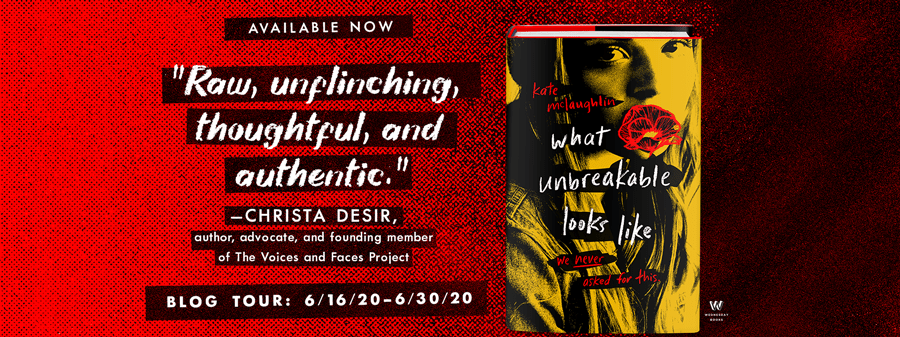
Lex was taken–trafficked–and now she’s Poppy. Kept in a hotel with other girls, her old life is a distant memory. But when the girls are rescued, she doesn’t quite know how to be Lex again.
After she moves in with her aunt and uncle, for the first time in a long time, she knows what it is to feel truly safe. Except, she doesn’t trust it. Doesn’t trust her new home. Doesn’t trust her new friend. Doesn’t trust her new life. Instead she trusts what she shouldn’t because that’s what feels right. She doesn’t deserve good things.
But when she is sexually assaulted by her so-called boyfriend and his friends, Lex is forced to reckon with what happened to her and that just because she is used to it, doesn’t mean it is okay. She’s thrust into the limelight and realizes she has the power to help others. But first she’ll have to confront the monsters of her past with the help of her family, friends, and a new love.
Kate McLaughlin’s What Unbreakable Looks Like is a gritty, ultimately hopeful novel about human trafficking through the lens of a girl who has escaped the life and learned to trust, not only others, but in herself.
Review
What Unbreakable Looks Like was a heart wrenching punch to the gut. The topic of this novel is human trafficking. McLaughlin shows how young girls are sometimes seduced into bondage. “Mitch was there for me when no one else was. He took care of me. He sold me. Beat me. Told me I was beautiful and said I was an ugly bitch. He said he loved me . . . ” I cried when I read these words. I cried knowing that there are girls out there living in dysfunctional homes who are willing to accept this kind of “love” any kind of love. That they do not know their worth and have been neglected to the point that any attention is good attention. But McLaughlin also shows here that anybody can be trafficked and that this is happening right in our backyards in small town America. These men are predators; highly manipulative and skilled at grooming the young and impressionable. They have long arms and a lot of money backing these enterprises. In the book McLaughlin uses the website Stall313 to shine light on the real life fight to end online human trafficking. I have not been able to watch the documentary I am Jane Doe that inspired this book but I have viewed an interview with its director Mary Mazzio. I was utterly shocked by how deep this went and the responses of some politicians and judges. I found it frustrating that Backpage.com and other websites like it are able to use Section 230 as a legislative loophole to get around their complicity in human trafficking.
Meet the Author
KATE McLAUGHLIN likes people, so much so that she spends her days making up her own. She likes writing about characters who are bent, but not broken – people who find their internal strength through friends, strife and sometimes humor. When she’s not writing, she likes studying people, both real and fictional. She also likes playing board games with friends, talking and discovering new music. A proud Nova Scotian, she’ll gladly tell you all about the highest tides in the world, the magical creation known as a donair, and people who have sofas in their kitchens. Currently, she lives in Connecticut with her husband and four cats. She’s the author of What Unbreakable Looks Like.
Hello Everyone! Welcome to my blog! First I would like to thank Justine Sha for inviting me on this blog tour. Red Sky Over Hawaii is what I consider a comfort read. With a take home message about living in the moment and believing in magic it certainly warmed my heart.
I would recommend this book to anyone who likes happily-ever-afters and found families.
Book Synopsis
For fans of Chanel Cleeton and Beatriz Williams, RED SKY OVER HAWAII is historical women’s fiction set in the islands during WWII. It’s the story of a woman who has to put her safety and her heart on the line when she becomes the unexpected guardian of a misfit group and decides to hide with them in a secret home in the forest on Kilauea Volcano.
The attack on Pearl Harbor changes everything for Lana Hitchcock. Arriving home on the Big Island too late to reconcile with her estranged father, all she can do is untangle the clues of his legacy, which lead to a secret property in the forest on Kilauea Volcano. America has been drawn into WWII, and amid rumors of impending invasion, the army places the islands under martial law. When they start taking away neighbors as possible sympathizers, Lana finds herself suddenly guardian to two girls, as well as accomplice to an old family friend who is Japanese, along with his son. In a heartbeat, she makes the decision to go into hiding with them all.
The hideaway house is not what Lana expected, revealing its secrets slowly, and things become even more complicated by the interest of Major Grant Bailey, a soldier from the nearby internment camp. Lana is drawn to him, too, but needs to protect her little group. With a little help from the magic on the volcano, Lana finds she can open her bruised heart to the children–and maybe to Grant.
A lush and evocative novel about doing what is right against the odds, following your heart, and what makes a family.
About the Author
Sara Ackerman is the USA Today bestselling author of The Lieutenant’s Nurse and Island of Sweet Pies and Soldiers. Born and raised in Hawaii, she studied journalism and earned graduate degrees in psychology and Chinese medicine. She blames Hawaii for her addiction to writing, and sees no end to its untapped stories. When she’s not writing or teaching, you’ll find her in the mountains or in the ocean. She currently lives on the Big Island with her boyfriend and a houseful of bossy animals. Find out more about Sara and her books at http://www.ackermanbooks.com and follow her on Instagram @saraackermanbooks and on FB @ackermanbooks.
Excerpt
THE ROAD December 8, 1941
WITH EVERY MILE CLOSER TO VOLCANO, THE FOG thickened, until they were driving through a forest of white gauze with the occasional branch showing through. Lana considered turning the truck around no less than forty-six times. Going back to Hilo would have been the prudent thing to do, but this was not a time for prudence. Of that she was sure. She slowed the Chevy to a crawl and checked the rearview mirror. The cage with the geese was now invisible, and she could barely make out the dog’s big black spots.
Maybe the fog would be to their advantage. “I don’t like it here at all,” said Coco, who was smashed up next to Lana, scrawny arms folded in protest. The child had to almost yell to be heard above the chug of the motor.
Lana grabbed a blanket from the floor. “Put this over you. It should help.” Coco shook her head. “I’m not cold. I want to go home. Can you please take us back?”
Goose bumps had formed up and down her limbs, but she was so stubborn that she had refused to put on a jacket. True, Hilo was insufferably hot, but where they were headed—four thousand feet up the mountain—the air was cold and damp and flimsy.
It had been over ten years since Lana had set foot at Kı¯lauea. Never would she have guessed to be returning under these circumstances. Marie chimed in. “We can’t go back now, sis. And anyway, there’s no one to go back to at the moment.”
Poor Coco trembled. Lana wished she could hug the girl and tell her everything was going to be okay. But that would be a lie. Things were liable to get a whole lot worse before they got any better.
“Sorry, honey. I wish things were different, but right now you two are my priority. Once we get to the house, we can make a plan,” Lana said. “But you don’t even know where it is,” Coco whined. “I have a good idea.” More like a vague notion.
“What if we don’t find it by dark? Are they going to shoot us?” Coco said. Marie put her arm around Coco and pulled her in. “Turn off that little overactive imagination of yours. No one is going to shoot us,” she said, but threw a questioning glance Lana’s way. “We’ll be fine,” Lana said, wishing she believed that.
The girls were not the real problem here. Of greater concern was what they had hidden in the back of the truck. Curfew was six o’clock, but people had been ordered to stay off the roads unless their travel was essential to the war. Lana hadn’t told the girls that. Driving up here was a huge risk, but she had invented a story she hoped and prayed would let them get through if anyone stopped them. The thought of a checkpoint caused her palms to break out in sweat, despite the icy air blowing in through the cracks in the floorboard.
On a good day, the road from Hilo to Volcano would take about an hour and a half. Today was not a good day. Every so often they hit a rut the size of a whiskey barrel that bounced her head straight into the roof. The continuous drizzle of the rain forest had undermined all attempts at smooth roads here. At times the ride was reminiscent of the plane ride from Honolulu. Exactly two days ago, but felt more like a lifetime.
Lana’s main worry was what they would encounter once in the vicinity of the national park entrance. With the Kı¯lauea military camp nearby, there were bound to be soldiers and roadblocks in the area. She had so many questions for her father and felt a mixed ache of sadness and resentment that he was not here to answer them. How were you so sure the Japanese were coming? Why the volcano, of all places? How are we going to survive up here? Why didn’t you call me sooner?
Coco seemed to settle down, leaning her nut-brown ringlets against her sister’s shoulder and closing her eyes. There was something comforting in the roar of the engine and the jostle of the truck.
With the whiteout it was hard to tell where they were, but by all estimates they should be arriving soon. Lana was dreaming of a cup of hot coffee when Coco sat upright and said, “I have to go tinkle.” “Tinkle?” Lana asked. Marie said, “She means she has to go to the bathroom.”
They drove until they found a grassy shoulder, and Lana pulled the truck aside, though they could have stopped in the middle of the road. They had met only one other vehicle the whole way, a police car that fortunately had passed by.
The rain had let up, and they all climbed out. It was like walking through a cloud, and the air smelled metallic and faintly lemony from the eucalyptus that lined the road. Lana went to check on Sailor. The dog stood up and whined, yanking on the rope around her neck, straining to be pet. Poor thing was drenched and shaking. Lana had wanted to leave her behind with a neighbor, but Coco had put up such a fuss, throwing herself onto her bed and wailing and punching the pillow, that Lana relented. Caring for the girls would be hard enough, but a hundred-and-twenty-pound dog?
“Just a bathroom stop. Is everyone okay back here?” she asked in a hushed voice. Two low grunts came from under the tarp. “We should be there soon. Remember, be still and don’t make a sound if we stop again.”
As if on cue, one of the hidden passengers started a coughing fit, shaking the whole tarp. She wondered how wise it was to subject him to this long and chilly ride, and if it might be the death of him. But the alternative was worse.
“Deep breaths…you can do it,” Lana said. Coco showed up and hopped onto the back tire. “I think we should put Sailor inside with us. She looks miserable.”
“Whose lap do you propose she sits on?” Lana said. Sailor was as tall as a small horse, but half as wide. “I can sit in the back of the truck and she can come up here, then,” Coco said in all seriousness. “Not in those clothes you won’t. We don’t need you catching pneumonia on us.”
They started off again, and ten seconds down the road, Sailor started howling at the top of her lungs. Lana felt herself on the verge of unraveling. The last thing they needed was one extra ounce of attention. The whole idea of coming up here was preposterous when she thought about it. At the time it had seemed like a good idea, but now she wondered at her sanity.
“What is wrong with that dog?” Lana said, annoyed. Coco turned around, and Lana felt her hot breath against her arm. In the smallest of voices, she said, “Sailor is scared.” Lana felt her heart crack. “Oh, honey, we’re all a bit scared. It’s perfectly normal under the circumstances. But I promise you this—I will do everything in my power to keep you out of harm’s way.” “But you hardly know us,” Coco said. “My father knew you, and you knew him, right?” Lana said. “And remember, if anyone asks, we tell them our story.”
They had rehearsed it many times already, but with kids one could never be sure. Not that Lana had much experience with kids. With none of her own and no nieces or nephews in the islands, she felt the lack palpably, smack in the center of her chest. There had been a time when she saw children in her future, but that dream had come and gone and left her sitting on the curb with a jarful of tears.
Her mind immediately went to Buck. Strange how your future with a person could veer so far off course from how you’d originally pictured it. How the one person you swore you would have and hold could end up wreaking havoc on your heart instead. She blinked the thought away.
As they neared Volcano, the fog remained like a curtain, but the air around them brightened.
Lana knew from all her time up here as a young girl that the trees got smaller as the elevation rose, and the terrain changed from towering eucalyptus and fields of yellow-and-white ginger to a more cindery terrain covered with red-blossomed ‘ohi‘a trees, and prehistoriclooking ha¯pu’u ferns and the crawling uluhe. At one time in her life, this had been one of her happiest places. Coco reached for the letter on the dashboard and began reading it for the fourth time. “Coco Hitchcock. It sounds funny.” The paper was already getting worn.
Marie swiped it out of her hands. “You’re going to ruin that. Give it to me.” Where Coco was whip thin and dark and spirited—a nice way of putting it—Marie was blonde and full-bodied and sweet as coconut taffy. But Lana could tell even Marie’s patience was wearing thin.
“Mrs. Hitchcock said we need to memorize our new names or we’ll be shot.” Lana said as calmly as she could, “I never said anything of the sort. And, Coco, you have to get used to calling me Aunt Lana for now. Both of you do.” “And stop talking about getting shot,” Marie added, rolling her eyes. If they could all just hold it together a little bit longer.
There was sweat pooling between her breasts and behind her kneecaps. Lying was not her strong suit, and she was hoping that, by some strange miracle, they could sail on through without anyone stopping them. She rolled her window down a couple of inches for a burst of fresh air. “We’re just about here. So if we get stopped, let me do the talking. Speak only if someone asks you a direct question, okay?”
Neither girl said anything; they both just nodded. Lana could almost see the fear condensing on the windshield. And pretty soon little Coco started sniffling. Lana would have said something to comfort her, but her mind was void of words. Next the sniffles turned into heaving sobs big enough to break the poor girl in half. Marie rubbed her hand up and down Coco’s back in a warm, smooth circle.
“You can cry when we get there, but no tears now,” she said. Tears and snot were smeared across Coco’s face in one big shiny layer. “But they might kill Mama and Papa.” Her face was pinched and twisted into such anguish that Lana had to fight back a sob of her own.
Hello Everyone and welcome to my stop on Lisa Braxton’s blog tour for The Talking Drum. Special thanks goes out to her publicist Laura Marie for getting this book into my hands. Here is where you can get your copy now:
In 1971, the fictional city of Bellport, Massachusetts is in decline with an urban redevelopment project on the horizon. The project promises to transform the dying factory town into a thriving economic center, with a profound effect on its residents. Sydney Stallworth steps away her law degree in order to support her husband Malachi’s dream of opening a cultural center and bookstore in the heart of their black community, Liberty Hill. Across the street, Della Tolliver has built a fragile sanctuary for herself, boyfriend Kwamé Rodriguez, and daughter Jasmine, a troubled child prone to frequent outbursts.
Six blocks away and across the Bellport River Bridge lies Petite Africa, a lively neighborhood, where time moves slower and residents spill from run-down buildings onto the streets. Here Omar Bassari, an immigrant from Senegal known to locals as Drummer Man, dreams of being the next Duke Ellington, spreading his love of music and African culture across the world, even as his marriage crumbles around him and his neighborhood goes up in flames. An arsonist is on the loose. As more buildings burn, the communities are joined together and ripped apart. In Petite Africa, a struggling community fights for their homes, businesses, and culture. In Liberty Hill, others see opportunity and economic growth. As the pace of the suspicious fires pick up, the demolition date moves closer, and plans for gentrification are laid out, the residents find themselves at odds with a political system manipulating their lives. “It’s a shame,” says Malachi, after a charged city council meeting, where residents of Petite Africa and Liberty Hill sit on opposing sides. “We do so much for Petite Africa. But still, we fight.”
Meet the Author
Lisa Braxton is an Emmy-nominated former television journalist, an essayist, short story writer, and novelist. She is a fellow of the Kimbilio Fiction Writers Program and was a finalist in the William Faulkner-William Wisdom Creative Writing Competition. She earned her MFA in creative writing from Southern New Hampshire University, her M.S. in journalism from Northwestern University, and her B.A. in Mass Media from Hampton University. Her stories have been published in anthologies and literary journals. She lives in the Boston, Massachusetts area.
Interview with Lisa Braxton
Q: The Talking Drum draws a lot from your own personal experience. I was curious when was the first time you saw yourself reflected back in a book?
A: Actually, I did not see myself reflected in any of the books I was reading while I was growing up. I grew up reading The Nancy Drew mysteries, The Hollister Family, The Bobbsey Twins, Louisa May Alcott’s Little Women, Harriet the Spy, Charlotte’s Web and many others. I loved these books. They helped to grow my love for reading and my desire to become a writer, but they didn’t reflect the world of a middle class African American girl growing up in the 1960s and 1970s enrolled at a parochial elementary school. I continue to be a voracious reader, but I still have not come across books that I can really identify with. I believe that’s helped to fuel my interest in writing about the kinds of African American characters that aren’t often seen in print.
Q: In your book The Talking Drum it focuses on a neighborhood called Petite Africa and there are three central couples within the story. I know that you developed this book around your parents experience with redevelopment and gentrification. Which of the three couples would you say is most like your parents?
A: Sydney and Malachi are most like my parents. Sydney has agreed to leave her law studies to support Malachi’s dream to open up a business in his hometown, Bellport. Sydney feels torn between finishing her studies and supporting what her husband wants to do. She’s trying to find her voice in the marriage. It may take her a while to learn how to assert herself.
When my father was a child her operated a little store in his neighborhood in a rural area of Virginia. Back then retail establishments were closed weekends. He’d buy candy and other items during the week and increase the price and sell those items on the weekend when they were impossible to get elsewhere. He loved retail. His dream was to operate a store when he became an adult. In 1969 when my parents were in their 30s, they opened a men’s clothing store in an urban area of Bridgeport, Connecticut. My mother wasn’t too thrilled with the idea, but it was something my father wanted to do. She decided to support his dream. She also at one time considered law school.
Q: Who is your favorite author andwhy?
A: Langston Hughes. I love his fiction. His writing has the ability to make me feel a range of emotions. Some of his short fiction was so touching that I would start crying while I was reading.
Q: What was the last book that thoroughly moved you? What was it about that book that spoke to your spirit and your heart?
A: The Street, by Ann Petry was the last book that thoroughly moved me. I had not experienced what Petry’s main character, Lutie Johnson went through, but from the beginning I understood what was at stake for Lutie. She wanted to provide a good and safe home for her son and become more upwardly mobile. Whenever a female character is striving for better, whetherdepicted in a movie or book, I’m there with the character urging them on. I know what it’s like to have ambition that you feel so strongly that you won’t let anything or anyone stop you. Petry’s novel had me on the edge of my seat as a read through pages that were filled with suspense and tension. All the while I was hoping for the character Lutie Johnson to beat the odds.
Q: I read in an article that your first short story Kitchen Fan is about your uncle. Would you say that all of your books are written based on people who are close to you? What else inspires your writing?
A: Usually the characters in my stories are composites, not based on anyone in particular. I find that I can develop the characters with more depth if I don’t base them on someone I know. I think I would feel self-conscious and want to be too polite as I developed a character if I based the individual on a real person. The veiled fiction about my uncle was an exception. I’m often inspired by situations. In the early stages of The Talking Drum I began developing the themes of urban redevelopment and gentrification. I know of at least a dozen people, including my parents who have been affected by those issues.
Q: How old were you when you first started writing?
A: Probably 10 or 11. I say that because I remember writing little stories and my sister, who is 6 years younger than me, enjoying them. She would have to have been at least 4 or so to understand what I was writing about. I’d write about dogs, horses, and other animals. I even personified a wall, giving it a personality and dialogue. My parents always gave me positive feedback, which encouraged me to keep at it.
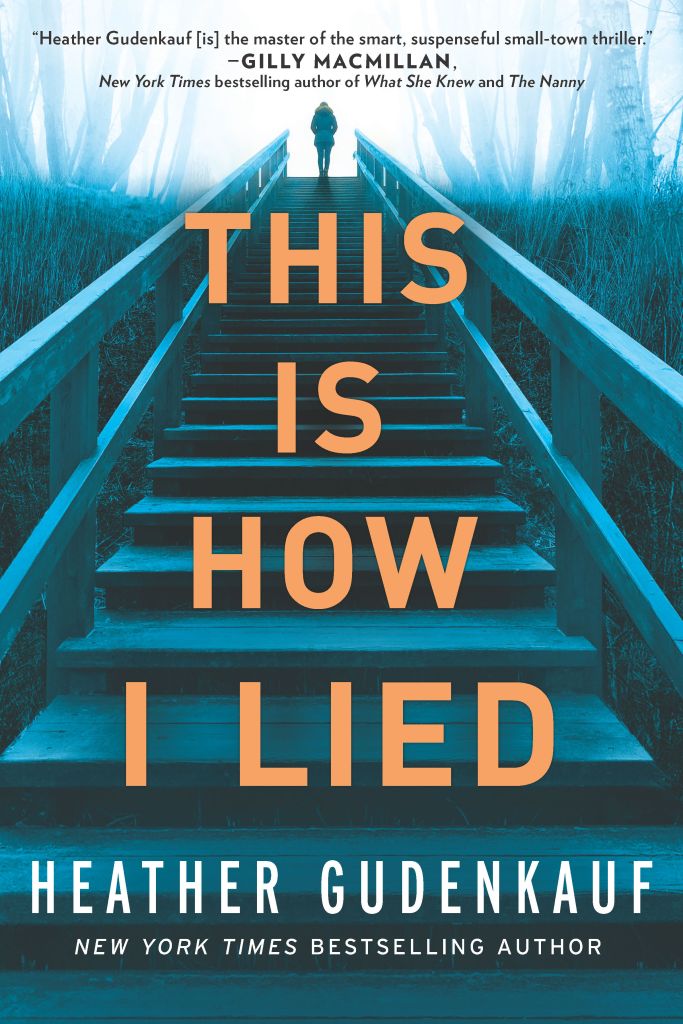
First of all I would like to thank Lia Ferrone at Harlequin Trade Publishing for inviting me on to this blog tour. This is How I Lied was a thrilling page turner that kept me up all night.
Synopsis
With the eccentricity of Fargo and the intensity of Sadie, THIS IS HOW I LIED by Heather Gudenkauf (Park Row Books; May 12, 2020; $17.99) is a timely and gripping thriller about careless violence we can inflict on those we love, and the lengths we will go to make it right, even 25 years later.
Tough as nails and seven months pregnant, Detective Maggie Kennedy-O’Keefe of Grotto PD, is dreading going on desk duty before having the baby her and her husband so badly want. But when new evidence is found in the 25-year-old cold case of her best friend’s murder that requires the work of a desk jockey, Maggie jumps at the opportunity to be the one who finally puts Eve Knox’s case to rest.
Maggie has her work cut out for her. Everyone close to Eve is a suspect. There’s Nola, Eve’s little sister who’s always been a little… off; Nick, Eve’s ex-boyfriend with a vicious temper; a Schwinn riding drifter who blew in and out of Grotto; even Maggie’s husband Sean, who may have known more about Eve’s last day than he’s letting on. As Maggie continues to investigate, the case comes closer and closer to home, forcing her to confront her own demons before she can find justice for Eve.
Review
I’ve been having trouble concentrating lately. How to entertain my children while stay at home orders are in place. The uncertainty of our household finances as our jobs take on different dimensions. The fear of what will be waiting for us on the other side of this pandemic – what world we will be stepping out into. I say this to say that as a bibliophile reading is usually my therapy, my escape from the travails of life. Recently I find that most books haven’t been able to clear the clouds that are in my head. But Heather Gudenkauf’s This is How I Lied was able to transport me to another place. For a moment (or a fast-paced thrilling day), I had a reprieve. My mind was in small town Grotto with pregnant deputy Maggie Kennedy- O’Keefe.
New evidence has popped up in the murder case of her best friend Eve Knox. Maggie’s emotions surrounding the case are further compounded by the fact that it was she who discovered the body 25 years ago. This was a bit of a sticking point for me. I had some trouble suspending disbelief here because we all know in real life this wouldn’t happen. Maggie was too involved with the victim and too involved with the case to be considered for the assignment. But let’s face it the real world sucks right now so I’m down for making exceptions. If you think that Maggie is intriguing, wait until you meet Eve’s baby sister Nora. She is a nut I’m sure you would like to crack. Her character adds many suspenseful moments and plenty of twists and turns. I wonder if she will pop up in any of Gudenkauf’s future work. I certainly would read anything with her in it.
Meet the Author
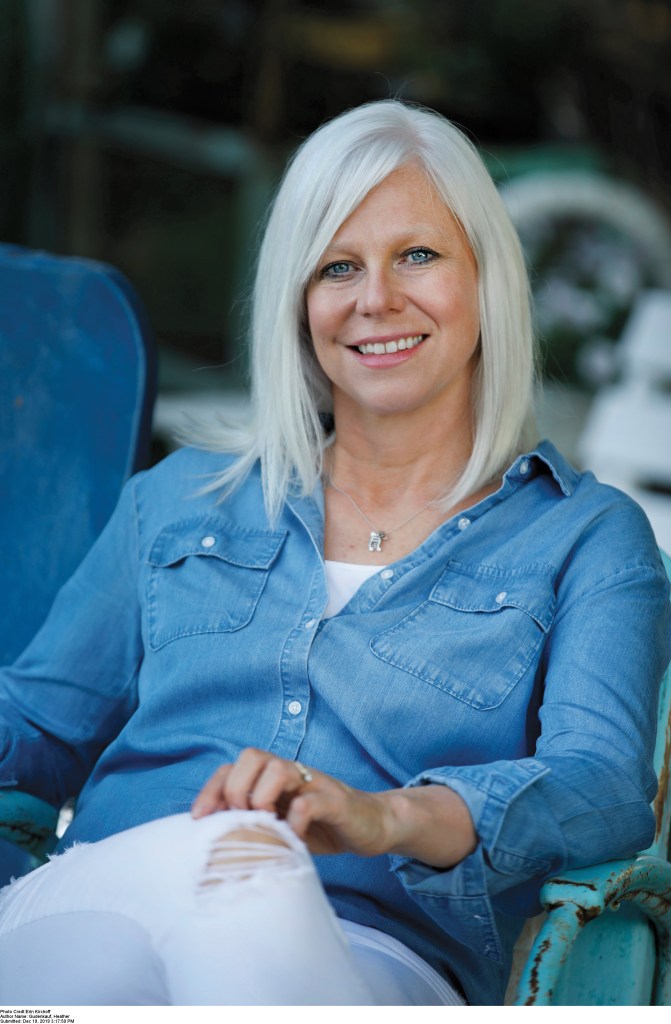
Heather Gudenkauf is the New York Times and USA Today bestselling author of many books, including The Weight of Silence and These Things Hidden. Heather graduated from the University of Iowa with a degree in elementary education, has spent her career working with students of all ages. She lives in Iowa with her husband, three children, and a very spoiled German Shorthaired Pointer named Lolo. In her free time, Heather enjoys spending time with her family, reading, hiking, and running.






















 Carry a Big Book