Josie presses her hands into the center of the drowned girl’s chest and pumps, counting off compressions. She takes in the girl’s beautiful face, her brown eyes glassy. The memory of a champion swimmer on the podium with her teammates—a red swim cap on, her head thrown back in laughter—a stark contrast to the cold, still body before her. Breathe. Just breathe…
The body of a young girl lying face down in a swimming pool—white tennis shoes still on her feet, chestnut hair fanned out like a halo—is the last thing Detective Josie Quinn expects to find on an early morning visit to see her brother before class at Denton University. But when she recognizes the girl’s face as she drags her limp body from the water, there’s only one question racing through Josie’s mind: how does a champion swimmer accidentally drown?
Nysa Somers’ family are distraught. She was a model student, beloved daughter and everybody’s friend. There’s no way she would do anything reckless enough to put her scholarship at risk, let alone her life. It’s up to Josie and her team to piece together what happened in the hours leading up to Nysa’s death, and that begins with finding her missing backpack.
But the bag, discarded in the woods on the nearby campus, contains nothing more than empty food wrappers, Nysa’s phone and a cryptic calendar entry telling her to be a mermaid.
The next day, a terrible housefire envelops the nearby home of a retired fireman, nearly killing his two granddaughters. The last words the little girls heard him mutter before he set the blaze were, be a match.
As the body count rises, it’s only Josie who can see the deadly pattern forming. Can she convince her team that the wrapper found in Nysa’s bag that everyone overlooked is the crucial link they’re missing? Not while her partner, Noah, is avoiding her calls and acting so coldly towards her. Josie knows she must go it alone if she’s going to stop this silent and calculated serial killer before any more precious lives are taken.
But with the killer finally in her sights, Josie takes a deadly risk and finds herself hanging onto life by her fingernails. Can she trust her team to save her, and before it’s too late?
An unputdownable and totally gripping crime thriller from an Amazon, USA Today and Wall Street Journal bestselling author. Perfect for fans of Angela Marsons, Robert Dugoni and Rachel Caine.
Review
What does a star swimmer a decorated hero and a police officer have in common? That is what Detective Josie Quinn must figure out. And fast before this elusive killer strikes again. In this case the serial killer has a unique modus operandi which gives them the wherewithal to kill from afar and watch the chaos ensue from a safe distance.
Breathe Your Last is the 10th installment in the Josie Quinn mystery series. Being a first time reader of Lisa Regan I did not find that to be a problem. I think the novel stood well enough on its own and I was able to get right into the story. Josie Quinn’s character is smart and clever. She is strong and loving and willing to put her own life at risk to save others, even the bad guys. As a new reader to the series I found that the glimpses into her back story made her all the more more relatable. I also enjoyed having time Josie Quinn’s family even though it took me a minute to figure out who was who.
The plot was fast moving. Once I picked it up I couldn’t put it down. Here we have a mystery where at first it is not clear how the killer picks their targets. We as readers get to hear the killer’s thoughts in short chapters interspersed between the investigation. These chapters add an eerie tone to the undercurrent of the novel and make the mystery even more intriguing. Regan keeps you waiting until the last minute to figure out how and why the killer strikes. I though it was a clever how she developed this story and the reasoning behind the killings. I’ve already looked into where I could get my hands on the earlier books in the series. Although they are not available through my library to borrow or to order, I found a discounted bundle on the first three books in the series on Amazon here.
Meet the Author
Lisa Regan is a USA Today, Wall Street Journal bestselling author and Amazon bestselling crime novelist. She has a bachelor’s degree in English and Master of Education Degree from Bloomsburg University. She is a member of Sisters In Crime, Mystery Writers of America and International Thriller Writers. She lives in Philadelphia with her husband and daughter.
From author Kia Abdullah, Take It Back is a harrowing and twisting courtroom thriller that keeps you guessing until the last page is turned.
One victim.
Four accused.
Who is telling the truth?
Zara Kaleel, one of London’s brightest legal minds, shattered the expectations placed on her by her family and forged a brilliant legal career. But her decisions came at a high cost, and now, battling her own demons, she has exchanged her high profile career for a job at a sexual assault center, helping victims who need her the most. Victims like Jodie Wolfe.
When Jodie, a sixteen-year-old girl with facial deformities, accuses four boys in her class of an unthinkable crime, the community is torn apart. After all, these four teenage defendants are from hard-working immigrant families and they all have proven alibis. Even Jodie’s best friend doesn’t believe her.
But Zara does—and she is determined to fight for Jodie—to find the truth in the face of public outcry. And as issues of sex, race and social justice collide, the most explosive criminal trial of the year builds to a shocking conclusion.
Review
At the center of this compelling drama is the rape of a deformed 16 year old girl by four of her classmates. In and of itself this premise has enough bones for a great legal thriller. But Abdullah takes us beyond “He said, she said” and has us take a good hard look at how societies respond to such high profile cases.
Our protagonist Zara has started on a new path in life. She has left behind her career as a barrister and has now assumed the role of advocate. We know that some trauma has brought her here and we see the fallout – strained relationships, substance abuse, casual sexual encounters. But the one area where Zara does not falter is in her unshakeable belief in Jodi’s story. Despite the ease with which Jodie has lied, her stories differing between advocate, police and lawyers. Despite the wholesome well bred reputation that the boys have. Despite her family’s pleas for her to leave the case alone. Despite the Muslim community denouncing her as a traitor.
As you turn the pages Take It Back develops into a complex shape that is layered with feminism, race and religion. We are asked as readers to view the case from all angles. To think about why men rape. To consider how physical beauty, or lack thereof, impacts how people perceive our character. Take it Back asks us to think about how society and culture mold us into individuals that can accept “boys just being boys”. We are tasked with looking at how our prejudices color and impede our quest for the truth.
Take It Back was a gripping novel. I look forward to reading Truth Be Told, the second installment in the Zara Kaleel series.
Meet the Author
KIA ABDULLAH is an author and travel writer. She has contributed to The Guardian, BBC, Channel 4 News, and The New York Times. Kia currently travels the world as one half of the travel blog Atlas & Boots, which receives over 200,000 views per month.
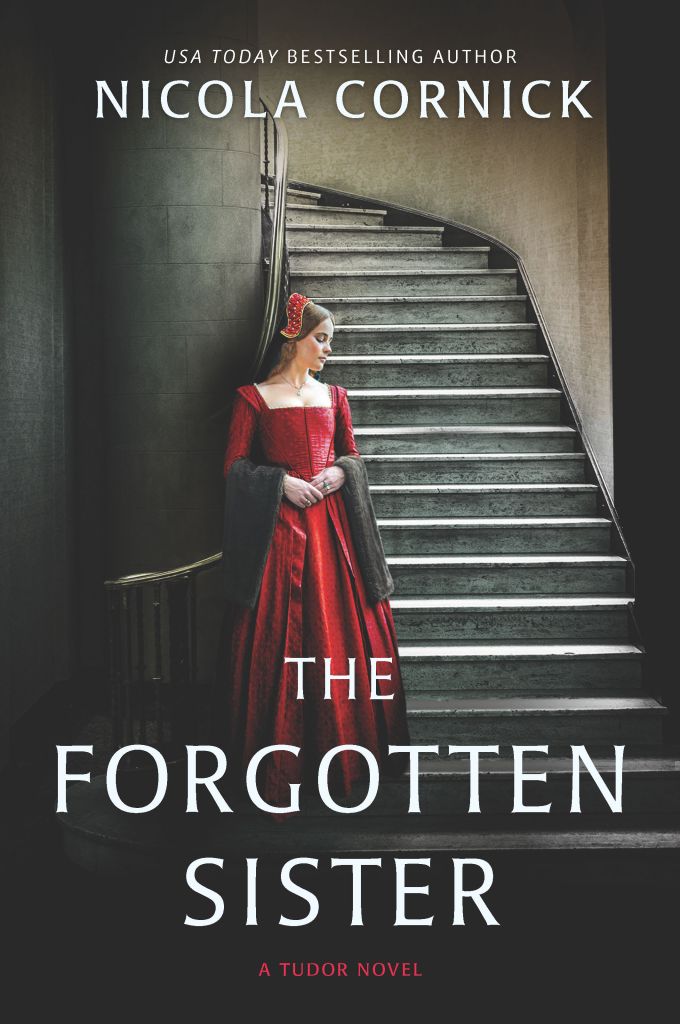
In the tradition of the spellbinding historical novels of Philippa Gregory and Kate Morton comes a stunning story based on a real-life Tudor mystery, of a curse that echoes through the centuries and shapes two women’s destinies…
1560: Amy Robsart is trapped in a loveless marriage to Robert Dudley, a member of the court of Queen Elizabeth I. Surrounded by enemies and with nowhere left to turn, Amy hatches a desperate scheme to escape—one with devastating consequences that will echo through the centuries…
Present Day: When Lizzie Kingdom is forced to withdraw from the public eye in a blaze of scandal, it seems her life is over. But she’s about to encounter a young man, Johnny Robsart, whose fate will interlace with hers in the most unexpected of ways. For Johnny is certain that Lizzie is linked to a terrible secret dating back to Tudor times. If Lizzie is brave enough to go in search of the truth, then what she discovers will change the course of their lives forever.
Review
The Forgotten Sister by Nicola Cornick is an historical fiction novel about the life and death of Amy Robsart. Lady Robsart was the wife to Queen Elizabeth I’s favorite guy, Robert Dudley. From historical accounts we know that Robsart died under mysterious circumstances and although quite a salacious tale at the time it seems as if history has erased her. When Cornick visited Cumnor Place she realized that Amy’s tomb was not to be found. This made her story the more intriguing and Cornick decided to bring her back to life.
In The Forgotten Sister Cornick utilizes a dual time frame between present day and Tudor England. Throughout time, parallel characters are cursed as history repeats itself.
When you first meet Amy and Lizzie you see how these women defined by the society’s expectations of women. Amy is bound to a loveless marriage and must suffer the public shame of being cuckolded. Lizzie is defined by how society thinks she should be responding to men. The platonic nature of her lifelong friendship with Dudley is questioned and at the same time, she is criticized for being virginal and sexless. Both of these women manage to find ways to rebel against the system and find their own path.
With romance, time travel and the paranormal Cornick weaves an unforgettable story that reminds us the value of women and that history is not to be forgotten or ignored.
Meet the Author
USA Today bestselling author Nicola Cornick has written over thirty historical romances for Harlequin and HQN Books. She has been nominated twice for a RWA RITA Award and twice for the UK RNA Award. She works as a historian and guide in a seventeenth century house. In 2006 she was awarded a Masters degree with distinction from Ruskin College, Oxford, where she wrote her dissertation on heroes.
Wanted: Company Daughters. Virtuous young ladies to become the brides of industrious settlers in a foreign land. The Company will pay the cost of the lady’s dowry and travel. Returns not permitted, orphans preferred.
Amsterdam, 1620. Jana Beil has learned that life rarely provides moments of joy. Having run away from a violent father, her days are spent searching for work in an effort to stay out of the city brothels, where desperate women trade their bodies for a mouthful of bread. But when Jana is hired as a servant for the wealthy and kind Master Reynst and his beautiful daughter Sontje, Jana’s future begins to look brighter.
But then Master Reynst loses his fortune on a bad investment, and everything changes. The house is sold to creditors, leaving Jana back on the street and Sontje without a future.
With no other choice, Jana and Sontje are forced to sign with the East India Company as Company Daughters: sailing to a colonial Dutch outpost to become the brides of male settlers they know nothing about. With fear in their hearts, the girls begin their journey – but what awaits them on the other side of the world is nothing like what they’ve been promised…
Based on true history, this is a beautiful and sensual historical novel, perfect for fans of The Girl with the Pearl Earring, The Miniaturist and The Indigo Girl.
Review
“I’ve spent most of my life in pursuit of respectability, and the one time I refused it, I finally felt free.”
Jana Biel has led a hard life. On her own at an early age she has been judged and defined by her circumstances. She has learned how to survive against the odds and make the most of her situation. Work hard, keep your head down, keep your past to yourself. At all costs protect your heart.
Over the course of the novel we see her growth and to some extent Sontje’s as well. The two women experience many hardships, but through it all there is light in Rajaram’s words. I was moved by the subversive text and the colorful descriptions of nature. Rajaram, although dealing with themes of oppression, kept reminding the reader of the beauty found in the everyday things in life.
To describe how ravenous Jana was – “She turns to fetch him while I wait on the doorstep next to the blue, open-mouthed crocuses. Hungry, just like me.”
On hope – “Helena once said the stars were like eyes watching us, winking like old friends, I always thought the stars protected us, reminded us that darkness is never complete.”
Comfort comes in the cadent song of the waves lapping onto the shore. Guidance is given by the unfurling branches of a tree.
Her descriptions of place make both Amsterdam and Batavia come alive. Careful attention is paid to the many layers in which people are oppressed. Through Jana’s narration we not only learn about this historical period but are provided a prism of compassion. We learn what it is like to be an orphan, a women of no means, queer in the 17th century. We are asked to consider the plight of the slave. Jana is flawed, human. But she is also empathetic and able to see outside herself. So when she falters she eventually recognizes, admits and tries to correct her mistakes. Her character and this book will stay with me for quite a while. Great debut!
Meet the Author
Samantha Rajaram spent most of her childhood in Gillette, Wyoming, where she and her family were the first Indian-Americans to live in the community. As a law student, she focused on social justice and international human rights law with a focus on female sex trafficking.
She is now an educator, and currently teaches composition at Chabot College in Hayward, California. She lives in the California Bay Area with her three children.
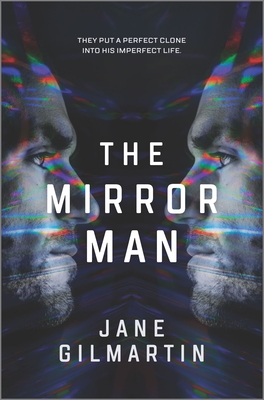
The offer is too tempting: be part of a scientific breakthrough, step out of his life for a year, and be paid hugely for it. When ViGen Pharmaceuticals asks Jeremiah to be part of an illegal cloning experiment, he sees it as a break from an existence he feels disconnected from. No one will know he’s been replaced—not the son who ignores him, not his increasingly distant wife—since a revolutionary drug called Meld can transfer his consciousness and memories to his copy.
From a luxurious apartment, he watches the clone navigate his day-to-day life. But soon Jeremiah discovers that examining himself from an outsider’s perspective isn’t what he thought it would be, and he watches in horror as “his” life spirals out of control. ViGen needs the experiment to succeed—they won’t call it off, and are prepared to remove any obstacle. With his family in danger, Jeremiah needs to finally find the courage to face himself head-on.
My Thoughts
Mirror Man is being billed as a science fiction thriller. But I feel that Gilmartin spends more time addressing the moral dilemma of human cloning. Jeremiah has the benefit of being an outsider looking into his life. He sees a lot that he does like and grows to understand how his circumstances and his limitations are the result of his own decisions. As time passes he becomes more judgmental of himself while learning to be more empathetic towards his clone and his family. Unfortunately, this moment of reflection comes after he has experienced irreversible losses. Kudos to Gilmartin on a debut that not only has a dynamic plot but also probes humanity and ethics. I also would like to give a special nod to Louie and his infinite wisdom.
Meet the Author
Jane Gilmartin has been a news reporter and editor for several small-town weekly papers and enjoyed a brief but exciting stint as a rock music journalist. A bucket list review just before she turned 50 set her on the path to fiction writing. Also checked off that list: an accidental singing career, attending a Star Trek convention, and getting a hug from David Bowie. She lives in her hometown of Hingham, Massachusetts.
Charles Scott glared down at him with a glint in his green eyes that felt like a warning, and Jeremiah replayed in his head the man’s ambiguous threat during their first meeting several weeks before.
“You now know as much about this project as anyone else involved,” he’d said. “It wouldn’t do to have too many people walking around with this kind of information. Our investors have a tendency to get nervous.”
Although Scott had quickly followed that remark with the matter of Jeremiah’s substantial compensation, there was no mistaking the implication: the moment he’d been told about the cloning project Jeremiah was already in. That first meeting hadn’t been an invitation so much as an orientation, and the contract he’d later signed had been a formality, at best. And the entire thing had done nothing but gain momentum from that moment on.
Dr. Pike continued to affix the wires to Jeremiah’s head. Jeremiah focused on the man’s gleaming black hair and the deep brown of his sure, professional hands, and he struggled to remember the allure of the $10 million payout he’d get at the end of the whole thing. That kind of money could fix a lot of problems. It would change things. The prospect of that fortune had been enough to make him turn away from principles he thought were unshakable. Every man has his price, he supposed.
Somewhere in the back of his mind he also acknowledged the real temptation of a twelve-month sabbatical from his own life. It had seduced him every bit as much as the money had. Maybe more. Between a job that had already begun to make him question his own morals, and a marriage that felt increasingly more like a lie, stress was eating him alive. And into his lap fell a chance to just walk away from all of it—without consequence and without blame. A free pass. He could simply walk away without anyone even knowing he was gone. There isn’t a man alive, he told himself, who would have refused. Despite the ethical question, despite that human cloning was illegal the world over, it would have tempted anyone.
Dr. Pike injected the clone with Meld and then turned wordlessly to Jeremiah with the second syringe poised above his left shoulder.
Jeremiah closed his eyes and rolled up his sleeve.
After the initial stab of the needle, he felt nothing. Which is not to say he didn’t feel anything; he literally felt nothing. Seconds after the injection, he became aware of a total emptiness, like a towering black wave that threatened to sink him into an immeasurable void. The experience was unlike anything he’d ever known. He imagined an astronaut suddenly untethered from his ship, floating helplessly into unending darkness. Without thinking, he immediately felt his body recoil. His mind screamed against it.
I’m dying!
From impossibly far away, he heard Dr. Pike say something about a heart rate and felt the slight pressure of a hand on his shoulder. He couldn’t see anything of the hospital room anymore. He was drowning in the blackness. His chest felt suddenly constricted. He fought just to find his breath.
“This is all perfectly normal, Mr. Adams. You have nothing to worry about. Concentrate on the sound of my voice. Nod if you can hear me.”
With considerable effort, Jeremiah managed what he hoped was a nod of his head. He was suddenly gripped by the alarming certainty that if he couldn’t communicate somehow, he’d be lost—swept away forever.
“Good. Good. Listen to my voice. It will keep you grounded.” Pike still sounded far away, but Jeremiah nodded again and struggled to focus. “What you are experiencing is to be expected. Do you remember when you took the Meld with Dr. Young? Do you remember the way you could feel her thoughts for the first few minutes?”
He nodded. It had been an unnerving thing to perceive her consciousness mixing with his like that. Flashes from her mind—odd, alien things like the feel of a blister on the back of her right heel, the familiar gleam in the eye of an old man he’d never seen—had swirled into the very structure of his own mind and fought for a place to settle. He had railed against that, too, and she had grounded him by flashing a penlight in his face, making him focus on that while the Meld took effect. Afterward, once he had sunk in, it had been easier.
“This is no different than what you experienced then,” Pike said. “This time, though, you are connected to an empty mind. There’s nothing there. But the more you resist, the longer this will take. You need to relax, Mr. Adams. Give in to it.”
Jeremiah nodded again and then shook his head with as much grit as he could muster. How does one give in to this? He didn’t think he could do it.
“Once your thoughts begin transferring into the mind of the clone it will be easier for you,” Pike urged. “Focus on a memory, as I suggested. Something vivid. It will help to fill that void you’re experiencing now. It will give you something to hang on to.”
Without the benefit of his full faculties, Jeremiah had little choice but to grab the last thing he’d been thinking about—his initial conversation with Charles Scott, the day all of this began.
He’d been surprised when he’d received an invitation to lunch from ViMed’s head of Engineering. The man was an icon in the science world, and although he’d quoted him a hundred times for the company, Jeremiah had never actually met him. He’d been intrigued enough to accept the invitation, especially when Scott had told him it involved a “proposition that could make him a very wealthy man.”
Flashes of that encounter and snatches of conversation now flitted through his mind like so many fireflies. He fought to catch them. “We’ve been watching you, Mr. Adams.”
“All we ask is one year of your life. Isn’t that worth $10 million?” “We can do this. The science exists. And with Meld, the clone will even share your thought patterns… Your own mother won’t know the difference.” “This is sanctioned by powerful people—we have millions in secret federal backing. There are billions more in eventual funding… There’s no need to be so suspicious, Mr. Adams.”
From somewhere far away, Jeremiah heard Dr. Pike repeating his name. He had been so engulfed in his efforts to hold on to the memory that he’d almost forgotten where he was. As soon as he realized it, the void loomed again in his mind.
“Mr. Adams,” Pike said, “you’ve got to listen to me. The clone cannot pick up on any memory of the experiment. What you’re thinking about is not going to help. You need to think about something else, some memory that won’t be filtered. His mind is still empty.”
Jeremiah panicked. He couldn’t think. And now that he wasn’t focused on anything, the blackness began to take over again, creeping closer and threatening to swallow him. He fought for breath.
“Relax, Mr. Adams,” Pike said. “Think about your job here at ViMed. Remember something the clone can actually use. Something he’ll need to know.”
He felt a dull jab at his shoulder. “This should help. I’ve given you a mild sedative. Take a few deep breaths. Concentrate on your breathing.”
With everything in him, Jeremiah tried to turn his mind away from the void that seemed to be all around him. He inhaled deeply and tried to focus on the rise of his own chest. Exhaled, and he felt his chest fall.
“Very good, Mr. Adams. Very good. Pulse is returning to normal. Deep breaths. Now, think about a typical day at work. Something ordinary and mundane.”
Inhale. Exhale. After a moment, Jeremiah began to relax and, as the sedative took hold, he found he could let his mind wander without the frantic thought that he’d never get it back. An oddly comforting fog seemed to expand in front of him, pushing the blackness away slightly, and Jeremiah retreated into it.
He began to think about the morning of the Meld fiasco—the day the New Jersey housewife had killed herself. The press had been circling. He’d arrived at his office with a terse mandate from his superiors to “get these fuckers off our back” and no idea how to accomplish that. It hadn’t been lost on him that not a single soul seemed bothered enough to stop and feel sorry about it, and he’d taken a quick moment behind his office door to offer silent condolences. It wasn’t thirty seconds before someone had come knocking, pushing him to get something done.
Weeks before, he’d heard talk of Meld being used to detect brain activity in a sixteen-year-old football player who had been comatose for nearly six months. Time to cash in. He tracked down the doctor somewhere in Delaware and the man started gushing about Meld, calling it “magical,” “a godsend” and “the most important medical advance of a generation.”
“After so many weeks,” he said, “the parents were hopeless.” Meld was a last resort before pulling the plug, and it gave them the first clear signs of neural activity in the boy.
“Not only was he aware and awake in there, but he was cognizant of everything that was going on around him—including the fact that his parents were losing hope. He even heard them talking about funeral arrangements at one point. The kid was scared, terrified. He was begging for his life in there. That’s what I saw when I took the Meld with him. Meld absolutely saved his life. There is no doubt in my mind.”
Jeremiah had almost smiled. It was pure gold. A few hours later, the story was in the hands of every major news outlet, and that doctor was spending his fifteen minutes of fame touting Meld as “a medical miracle.”
Jeremiah focused on that now. Maybe Meld did have some silver lining, after all, he thought. Maybe it was miraculous.
fore·shad·ow /fôrˈSHadō/ verb to predict something or to give a hint of what is to come.
Foreshadow was originally an online literary project that featured new and emerging authors from marginalized groups. Each of their stories is introduced here by some of the most highly recognized and beloved voices in YA today. Following each tale is a brief glimpse into the writer’s mind:
What myths are incorporated into their stories and why?
Why the story is narrated in first person or second person voice and how does this change how the audience views the characters?
The importance of humor in driving the story.
At the end of each tale editors Emily X. R. Pan and Nova Ren Suma add their analysis. This look into the writing process and how it informs the writing style is eye-opening and adds another depth of understanding to the work. Foreshadow goes further to include writing prompts for the audience based on some of the stories.
This anthology had a vast array of genres and facets of life. Overall Foreshadow was clever and magical and uplifting. I personally found it refreshing to see girls and women given so much freedom to be who they are and exercise their power and gifts. I can see and would hope that high school teachers would include this book as part of their curriculum. I hope that the authors and editors realize their goal of “foreshadowing” where the landscape of YA fiction is going. We certainly need more of these new voices and their stories.
Meet the Editors
Nova Ren Suma is the author of the #1 New York Times bestselling The Walls Around Us, which was an Edgar Award finalist. She also wrote Imaginary Girls and 17 & Gone and is co-creator of FORESHADOW: A Serial YA Anthology. She has an MFA in fiction from Columbia University and teaches writing at Vermont College of Fine Arts and the University of Pennsylvania. Originally from the Hudson Valley, she spent most of her adult life in New York City and now lives in Philadelphia.
Emily X.R. Pan is the New York Times bestselling author of The Astonishing Color of After, which won the APALA Honor Award and the Walter Honor Award, received six starred reviews, was an LA Times Book Prize finalist, and was longlisted for the Carnegie Medal. She lives in Brooklyn, New York. Visit Emily online at exrpan.com, and find her on Twitter and Instagram: @exrpan.
Bestselling and award-winning author Lisa Unger returns with her best novel yet. Reminiscent of the classic Strangers on a Train, Confessions on the 7:45 is a riveting psychological thriller that begins with a chance encounter on a commuter train and shows why you should never, ever make conversation with strangers.
Be careful who you tell your darkest secrets…
Selena Murphy is commuting home from her job in the city when the train stalls out on the tracks. She strikes up a conversation with a beautiful stranger in the next seat, and their connection is fast and easy. The woman introduces herself as Martha and confesses that she’s been stuck in an affair with her boss. Selena, in turn, confesses that she suspects her husband is sleeping with the nanny. When the train arrives at Selena’s station, the two women part ways, presumably never to meet again.
But days later, Selena’s nanny disappears.
Soon Selena finds her once-perfect life upended. As she is pulled into the mystery of the missing nanny, and as the fractures in her marriage grow deeper, Selena begins to wonder, who was Martha really? But she is hardly prepared for what she’ll discover.
Expertly plotted and reminiscent of the timeless classic Strangers on a Train, Confessions on the 7:45 is a stunning web of lies and deceit, and a gripping thriller about the delicate facades we create around our lives.
Review
“Sometimes a stranger was the safest place in your life.”
And sometimes there is danger lurking in the unknown.
When working mom Selena confides her suspicions with a stranger on the train she feels a momentary release from the burden of her secret. Oddly, she feels a connection to this woman even though she she doesn’t quite understand why. Her brief meeting leaves her feeling uneasy especially after the woman starts texting her. But Selena has bigger problems to deal with. Her nanny has gone missing and the police are asking questions. Questions that if answered truthfully could put her and her husband in hot water.
The twists in Confessions on the 7:45 come early and hit hard. For a moment you are both intrigued and unsettled. You may not yet have a clue as to where the novel is headed, but you are certainly anxious to find out. Loosely based on Highsmith’s Strangers on a Train, Confessions reminds us how much of our lives are on display for the world to see and how this technology may be used against us.
In Confessions on the 7:45 Unger delves into those liminal spaces where things are neither black or white. People are not all good or all bad.
The found family trope takes on new meaning when you have a psychopath at its center. For each character Unger shows how they were shaped by their childhood experiences. Family secrets are not just burdens for those who hold them; their price can be meted out upon the heads of those kept in the dark.
Adding to this mystery are the layers of metaphor Lisa Unger weaves into her writing. People are like pine seedlings on a forest floor. They appear to be refuse, litter to be consumed by fire. But instead that pressure and heat is the spark they need to blossom and flourish and start on their path in life. This sentiment is repeated with the myth of the phoenix rising out of the ashes to fly unburdened into the sky.
Confessions on the 7:45 is my third Lisa Unger book. I find her work to be intelligently written with much thought given to the development of her characters. Readers are pulled in to the stories because her characters are relatable. They can be you or me or someone we know. Their past lives are given enough attention that you understand what makes them tick.
The plot is full of twists and turns and plenty of salacious details. I was riveted to my seat all day long.
Highly recommended for thriller and mystery fans.
Meet the Author
Lisa Ungeris the New York Times and internationally bestselling author of eighteen novels, including CONFESSIONS ON THE 7:45 (Oct. 2020). With millions of readers worldwide and books published in twenty-six languages, Unger is widely regarded as a master of suspense. Her critically acclaimed books have been voted “Best of the Year” or top picks by the Today show, Good Morning America, Entertainment Weekly, Amazon, IndieBound and others. Her essays have appeared in The New York Times, Wall Street Journal, NPR, and Travel+Leisure. She lives on the west coast of Florida with her family.
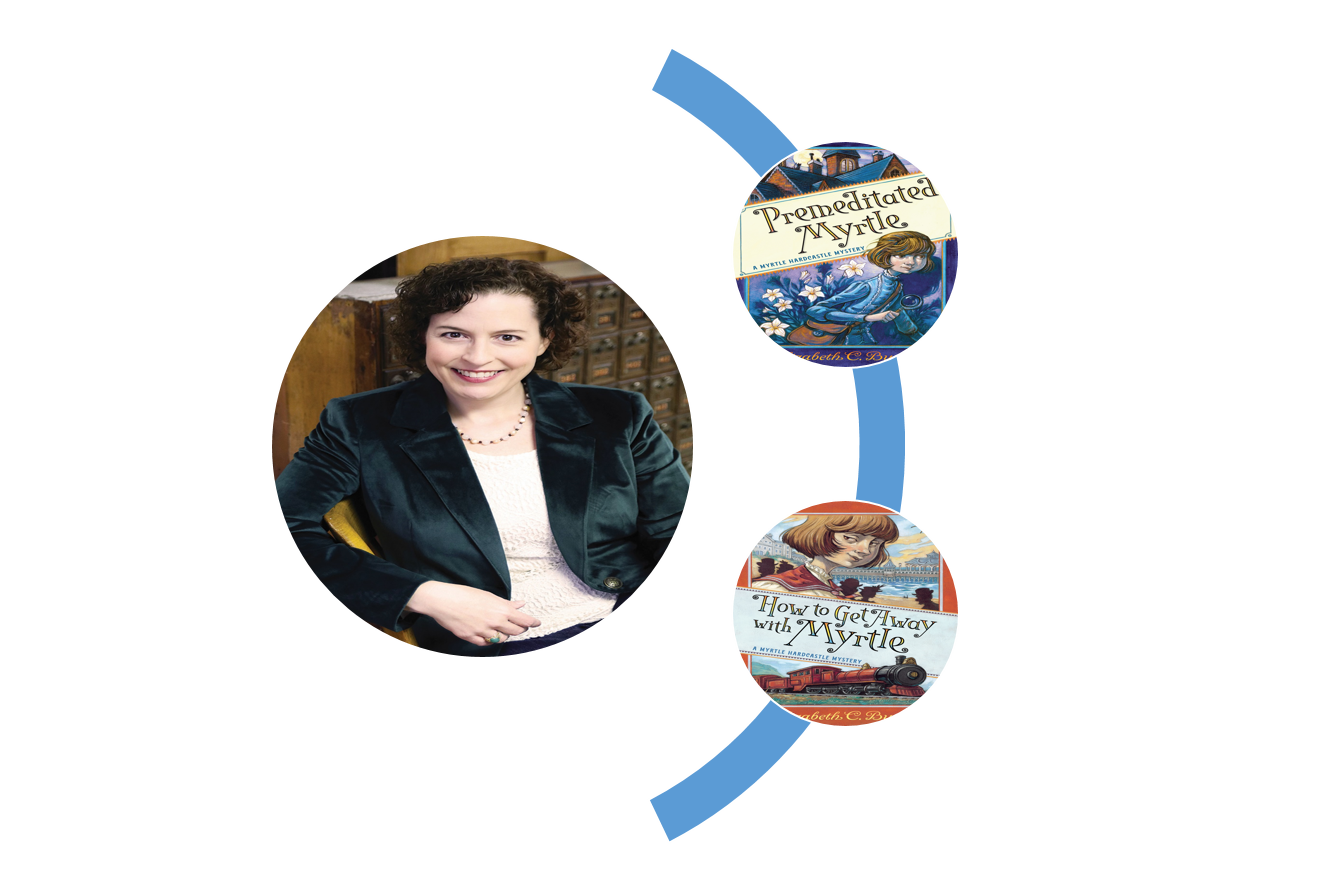
Our Myrtle does not fit into the mold that English society believes is becoming of a little lady. She is precocious and asks a lot of questions. With an interest in both her late mother’s science background and her father’s legal background, Myrtle has what some feel is a morbid curiosity with death and murder. This passion for forensics however makes Myrtle one hell of a sleuth. The problem is that at 12 years old none of the adults in her life, save for her governess Miss Judson, bother to listen to her.
When her next-door neighbor, a wealthy spinster and eccentric breeder of rare flowers, dies under Mysterious Circumstances, Myrtle seizes her chance. With her unflappable governess, Miss Ada Judson, by her side, Myrtle takes it upon herself to prove Miss Wodehouse was murdered and find the killer, even if nobody else believes her — not even her father, the town prosecutor.
This second book in the series finds Myrtle Hardcastle and her beloved Miss Judson on a train ride along the English countryside. It’s supposed to be a relaxing holiday. Perhaps one that Myrtle was dreading because she would be under the watchful eye of her stern Aunt Helen. But not before long Myrtle finds herself thrust into another mystery. A priceless tiara is stolen and one of the passengers is murdered — with her Aunt Helen’s sewing shears! Our plucky young protagonist must race against time to prove her aunt is innocent. But can she get the local authorities to listen to her?
My Thoughts on the Series
I was excited to read these books because I grew up reading Nancy Drew. I was hoping that I could find a series featuring a strong female character that my daughter could be inspired by. Like Nancy Drew, Myrtle Hardcastle is quite the detective. But Myrtle has more obstacles to overcome. Her mother is deceased having succumbed to a disease. As the local prosecutor, her father’s job demands much of his time. Living in the late 19th century England she is expected to be a charming little lady honing her domestic skills. Because she is younger any pleas that she may have to discuss a case are often thwarted.
As I read the series I couldn’t help but be reminded of Harper Lee’s Scout. Both of these characters defied convention. Both have special relationships with their fathers where they know and love their daughter’s differences, even if at times their natures get them into trouble.
The Myrtle Hardcastle series is cleverly formatted. Myrtle is not just the narrator, but the writer of the story often taking time to address her dear readers personally. Throughout both books Bunce treats us to footnotes that serve as cute anecdotes and tidbits of trivia. Many of the chapters in this series also begin with blurbs from Myrtle’s books that sets the stage for that chapter. I feel that this format will make the Myrtle Hardcastle series more appealing to its target audience – middle grade readers. But I do feel that this cozy mystery series has something for adults too. Besides good characterization and an engaging style of writing each novel deals with issues of feminism and racial representation. The mysteries in and of themselves are craftily devised and have enough meat to sustain an adult’s attention.
Mom’s Verdict
I enjoyed the Myrtle Hardcastle series a lot but at 8 years old my daughter may not be quite ready for this series. I would say that 12 may be the ideal age to introduce her Myrtle Hardcastle. But I look forward to when that time comes and hope that my daughter is as excited to read about this plucky heroine’s adventures as I was. In the meantime she’ll have to settle on relishing eating the famous Stansberry pie from Premeditated Myrtle.
Meet the Author
From the Elizabeth Bunce’s website: “I am a fan of all things fantastical, mysterious, spooky, and old. I write historical fantasy, mysteries, and ghost stories for young readers, and discerning not-so-young readers. My books are inspired by real places and cultures of the past, often with otherworldly or magical elements.”
“I’m a native Midwesterner, living in the tall grass prairie near Kansas City with my husband and our feline supervisory staff. When I’m not writing, you’ll usually find me Making something—cosplay, needlework, historical costuming, quilting… but not cooking.”
From Goodreads: “Her first novel, A Curse Dark as Gold, won the inaugural William C. Morris Award for a young adult debut novel and was named a Smithsonian Notable Book. Her high fantasy Thief Errant series includes the novels StarCrossed, A Chicago Public Library Best of the Best book for 2010, and Liar’s Moon, one of Kirkus Blog’s Favorite YA Novels of 2011. StarCrossed and A Curse Dark as Gold have appeared on Oprah’s Kid’s Reading List. Her novels have been named to the ALA’s Best Fiction for Young Adults list, and she is a three-time Kansas Notable Book winner. An accomplished needlewoman and historical costumer, Elizabeth lives in the Midwest with her husband, her cats, and a boggart who steals books.”
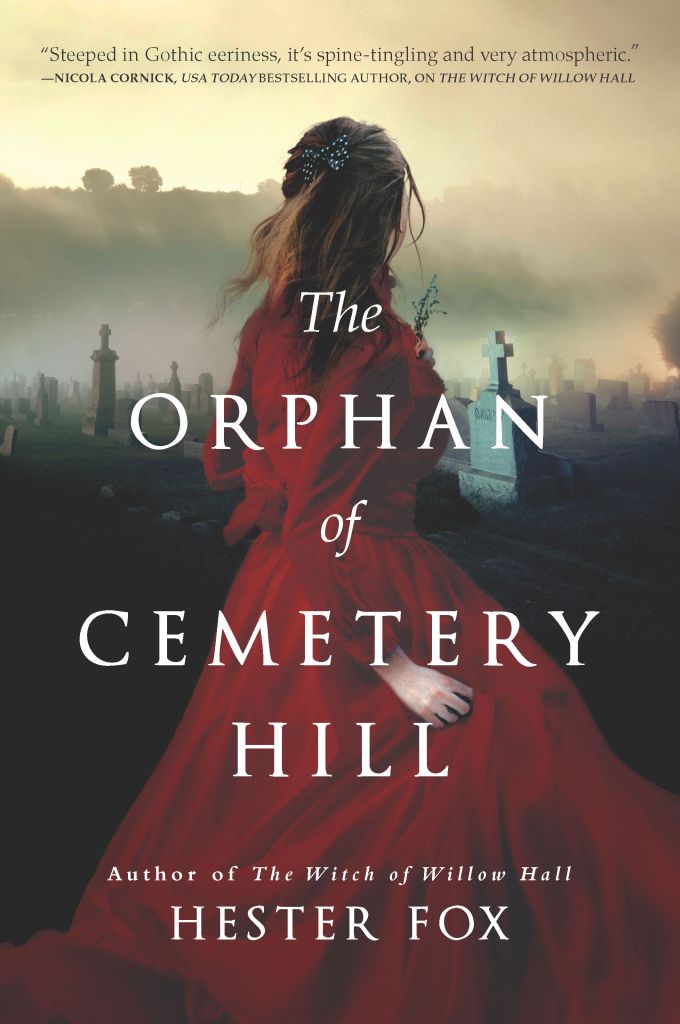
The dead won’t bother you if you don’t give them permission.
Boston, 1844.
Tabby has a peculiar gift: she can communicate with the recently departed. It makes her special, but it also makes her dangerous.
As an orphaned child, she fled with her sister, Alice, from their charlatan aunt Bellefonte, who wanted only to exploit Tabby’s gift so she could profit from the recent craze for seances.
Now a young woman and tragically separated from Alice, Tabby works with her adopted father, Eli, the kind caretaker of a large Boston cemetery. When a series of macabre grave robberies begins to plague the city, Tabby is ensnared in a deadly plot by the perpetrators, known only as the “Resurrection Men.”
In the end, Tabby’s gift will either save both her and the cemetery—or bring about her own destruction.
My Thoughts
The Orphan of Cemetery Hill is my first Hester Fox novel. I found her writing to be very atmospheric. I was easily transported back in time. Tabby’s character resonated with me. I was scared for the child abandoned and happy for the girl who found a home. She was resilient and despite the trauma she endured she still was a compassionate and loving person. Despite the fact that I usually gravitate towards kick a$$ females I could appreciate the fact that Hester Fox’s characterization of Tabby as a “little woman waiting to be rescued by her knight in shining armor” was true to the way women in that era were treated. I still don’t like Caleb though and was a bit skeptical about his professions of love. But I digress.
Overall, The Orphan of Cemetery Hill was an enjoyable and engaging read. I was taken in by the mystery and loved that the book was loaded with history. I also enjoyed how Hester Fox handled both Tabby’s and Alice’s supernatural gifts. It was just the right amount of the paranormal: enough to keep me intrigued and not too much where the story would be unbelievable. Definitely picking up Hester Fox to read again.
Historical Perspective
The Orphan of Cemetery Hill takes place in Boston before the abolition of slavery and the establishment of equal women’s rights. Set in 1844, many slaves had escaped to the North for freedom but did not have much protection under the law. The Seneca Falls Convention has yet to happen but the Suffragettes are organizing and increasing their numbers.
Invasion of the Body Snatchers
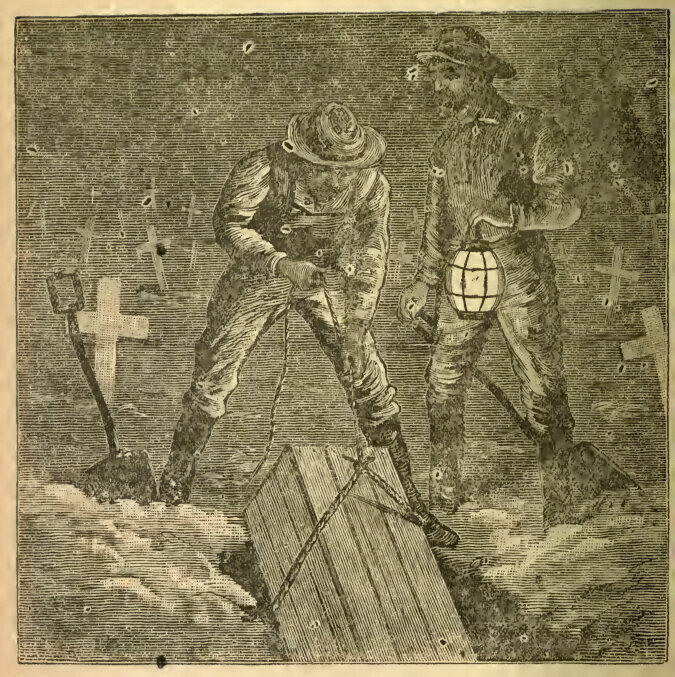
Harvard was a burgeoning medical center and its numbers of medical students were rapidly increasing. The one or two cadavers that the school would obtain each year meant that the entire class would be sharing and dissecting a specimen for the full year. With the Paris Method of teaching hands on being the definitive instruction method this meant that there were simply not enough cadavers to meet the needs of the anatomy classes.
Legally, medical schools would be given the bodies of the indigent and executed criminals. Bodies of slaves were also sold, stolen and given over to the schools for experimentation. At Harvard Medical School a secret student society called the Spunkers formed to meet the rising demand for bodies.
Their means of procuring cadavers – grave robbing. In some cases they were quite clever. Some members would go to funerals and blend in with the mourners so that they knew where the fresh graves were. They would pull up the casket by the head slipping the body out through a small opening and returning the casket to the grave. If anyone were to stumble across the grave it would appear undisturbed. They also were quite deliberate about whose grave they would rob. If they disinterred bodies from slave burial grounds they knew there would be no legal ramifications.
Body snatching was so widespread that people started to take extra precautions when burying their loved ones. Family members would vigilantly guard the grave for weeks. Special cages were erected around the grave. The most extreme measures were perhaps the grave guns and coffin torpedoes that were attached to caskets, primed and at the ready.
Meet the Author
Hester Fox is a full-time writer and mother, with a background in museum work and historical archaeology. Most weekends you can find Hester exploring one of the many historic cemeteries in the area, browsing bookshops, or enjoying a seasonal latte while writing at a café. She lives outside of Boston with her husband and their son.
Wallace and Gromit meets Winnie-the-Pooh in a fresh take on a classic odd-couple friendship, from Newbery Honor author Amy Timberlake with full-color and black-and-white illustrations throughout by Caldecott Medalist Jon Klassen.
No one wants a skunk.
They are unwelcome on front stoops. They should not linger in Important Rock Rooms. Skunks should never, ever be allowed to move in. But Skunk is Badger’s new roommate, and there is nothing Badger can do about it.
When Skunk plows into Badger’s life, everything Badger knows is upended. Tails are flipped. The wrong animal is sprayed. And why-oh-why are there so many chickens?
“Nooooooooooooooooooooo!”
Newbery Honor author Amy Timberlake spins the first tale in a series about two opposites who need to be friends.
New York Times bestselling author/illustrator and Caldecott Medalist Jon Klassen completes the book with his signature lushly textured art. This beautifully bound edition contains both full-color plates and numerous black-and-white illustrations.
Skunk and Badger is a book you’ll want to read, reread, and read out loud . . . again and again.
My Take
“Adventure and Science made the best stories.”
Skunk and Badger represent these two opposites but show that joy is to be had by embracing both of these principles. Adventure is fun but things get messy. (Beware of rocket potatoes!) Science has structure and discipline but its very essence is magic. Timberlake captures this very well in her story of Chicken Little the Mighty.
What Geralyn Liked Best
My daughter’s favorite character was Skunk. She liked him because he seemed like a lot of fun. She used his jumping on beds as her example. Most importantly for her was that he could COOK. Yes! With a capital C! And Lord knows my girl likes to eat. It may be her favorite pastime. LOL I mean no harm. I am a foodie too 🙂 But my girl was coming up with ideas. Skunk is putting this Momma to work! I have to be honest and say that those strawberry cinnamon muffins sounded delish. We’ll be savoring all of their goodness this weekend. Here’s the recipe in case you guys would like to share it with your kiddos as well.
For my part I have to admit that I sound a lot like Badger these days. Working from home is challenging and it’s hard to find a quiet place to work without interruption. Oh how I envy Skunk though. That moon room sounds like the ultimate reading nook.
Artwork by Jon Klassen
What We Learned As a Family
Everyone must contribute. “It’s a Law of Nature.”
“The fastest way to win a kingdom is by being kind and gentle instead of using violence and cruelty.”
It’s easier to make friends when you show a genuine interest in getting to know them, their likes and dislikes.
Sincere Sorrys do not come with “Buts”. (But this . . . But that)
You should get to know someone first before making judgments about them. It is wrong to lump groups of animals (or people) together and assume they all act the same way.
Family Fun Ideas
Go rock hunting! Explore some of our local national parks to see how many different types of rocks we can find.
Learn more about rock properties using a rock testing kit.
Make our own gem bracelets.
Grow a potato at home.
Make PEEP kebobs.
Write and illustrate our own retellings of Chicken Little.
Meet the Author
From her website:“Amy Timberlake grew up in Hudson, Wisconsin. She attended Mount Holyoke College and majored in History. She also holds an M.A. in English/Creative Writing. Most of the time, she can be found in Chicago, where she lives with her husband. But on especially good days she can be found walking on a long, long trail.”
Meet the Illustrator
From Goodreads:“Jon Klassen received the 2010 Canadian Governor General’s Award for his illustrations in Caroline Stutson’s CAT’S NIGHT OUT. He also created illustrations for the popular series THE INCORRIGIBLE CHILDREN OF ASHTON PLACE and served as an illustrator on the animated feature film Coraline. I WANT MY HAT BACK is the first book he has both written and illustrated. Originally from Niagara Falls, Canada, he lives in Los Angeles.”





















 Carry a Big Book