Blog Tour: Hieroglyphics

Synopsis

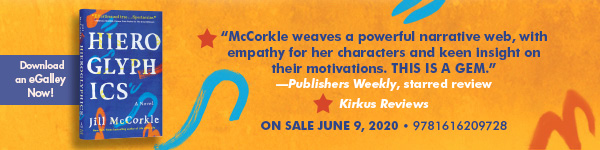
Lil and Frank married young, launched into courtship when they bonded over how they both—suddenly, tragically—lost a parent when they were children. Over time, their marriage grew and strengthened, with each still wishing for so much more understanding of the parents they’d lost prematurely.

Now, after many years in Boston, they have retired in North Carolina. There, Lil, determined to leave a history for their children, sifts through letters and notes and diary entries—perhaps revealing more secrets than Frank wants their children to know. Meanwhile, Frank has become obsessed with what might have been left behind at the house he lived in as a boy on the outskirts of town, where a young single mother, Shelley, is just trying to raise her son with some sense of normalcy. Frank’s repeated visits to Shelley’s house begin to trigger memories of her own family, memories that she’d rather forget. Because, after all, not all parents are ones you wish to remember.

Hieroglyphics reveals the difficulty of ever really knowing the intentions and dreams and secrets of the people who raised you. In her deeply layered and masterful novel, Jill McCorkle deconstructs and reconstructs what it means to be a father or a mother, and what it means to be a child piecing together the world all around us, a child learning to make sense of the hieroglyphics of history and memory.


Review

Hieroglyphics opens as a character study of three generations of people not necessarily connected by family, but related by home. Lil and Frank are an older couple returning to their hometown in the winter of their lives. Shelley is a single mother of two boys Jason and Harvey. She and Harvey live alone in Frank’s childhood home.

We get a very good sense of Lil through her collection of letters and odd bits of history that she leaves about the house. Of all the characters her voice was the one resonated with me the most. I felt nostalgic at times even though she is not of my generation nor is her story my story. I was just pulled in by the love that she showed her family, her inner strength and her loyalty.

Frank is an archaeologist who investigates “graves and caves” in search of clues of long gone civilizations. But the past that he is really trying to decipher is his own.

Shelley works as a stenographer who is beset by the current case that she is transcribing. It is a high profile murder case where she over identifies with the victim. As she listens to testimony it triggers flashbacks of her past traumas. This intense anxiety is causing her to reflect on different aspects of her life. Not only forcing her to revisit her mistakes of the past, but to also reevaluate her decisions as a parent.

Poor Harvey thinks their home is haunted. There is a ghost that lingers at night and causes him to wet the bed. He has a vivid imagination. When he puts on one of his fake mustaches he could be either a sentient adult or a superhero known as Super Monkey. His superpower is that he can talk serial killers out of doing wrong and turn them onto the path of all that is moral and good. All of these are symptoms of his overriding fears – his sensitivity over his cleft lip, his abandonment by his father and his awareness of his mother’s grief and distress.

When I was a student I found that picking a title that encapsulated the heart of my story was perhaps one of the hardest tasks of writing. So now as an adult whenever I read a book I try to figure out why the author chose the title and its significance. After reading Hieroglyphics I came up with two justifications for the name.

Hieroglyphics are an ancient code of pictures that tell a story. Each of the characters encode their experiences. Shelley uses shorthand while transcribing her cases. Harvey and his brother trade secrets in Klingon. Lil reminisces over her mother’s unique sort of jargon. She and Frank share secret words so if one dies first they can “send messages” through the living.

Hieroglyphics are a language that informs the past. Here the past can be bittersweet with characters at times examining their lives through experiences of death and catastrophe. As Lil helps her daughter prepare for her wedding she is reminded of her own. Although her own mother was taken before she wed Frank she feels blessed to share this moment with her daughter and remembers how tragedy brought her and Frank together.

Take your time reading this book. It is subtle. It is sublime. If I had to sum Hieroglyphics up in one sentence I would say that it was a heartfelt, bittersweet examination of the legacy we leave behind for those we love. Highly recommend.


Meet the Author

Jill McCorkle’s first two novels were released simultaneously when she was just out of college, and the New York Times called her “a born novelist.” Since then, she has published six novels and four collections of short stories, and her work has appeared in Best American Short Stories several times, as well as The Norton Anthology of Short Fiction. Five of her books have been New York Times Notable books, and her most recent novel, Life After Life, was a New York Times bestseller. She has received the New England Booksellers Award, the John Dos Passos Prize for Excellence in Literature, and the North Carolina Award for Literature. She has written for the New York Times Book Review, the Washington Post, the Boston GlobeGarden and Gun, the Atlantic, and other publications. She was a Briggs-Copeland Lecturer in Fiction at Harvard, where she also chaired the department of creative writing. She is currently a faculty member of the Bennington College Writing Seminars and is affiliated with the MFA program at North Carolina State University.


Buy Links

Book Review: Luster

My Thoughts

Luster — lus·​ter | \ ˈlə-stər:

  • 1. :a gentle sheen or soft glow, especially that of a partly reflective surface.
  • 2. a: a glow of light from within LUMINOSITY the luster of the stars; b: an inner beauty RADIANCE
  • 3 a superficial attractiveness or appearance of excellence

I have a hard time putting into words what I think about this book. I didn’t really like the characters and I found the story sad. There is quite a bit of social commentary though. Now please understand that a book does not need likeable characters to be a good book. There are some books where the only reason why I read them is because of the bad@$$ antagonist. Sometimes you need a character you love to hate to drive the novel. But Luster is not that type of novel. All the characters are suffering and throughout the book we see them archiving their loneliness and sorrow in different ways. It doesn’t matter what skin they are in – young, old, black, white, rich or poor — there is pain and desolation here. And you wait a long time for Edie to find her inner beauty and shine. In the end she discovers more about who she is, but she has not come full circle yet.

As I was reading there were sentences that stopped me in my tracks. All I could say is “Wow! That’s deep!” There was poetry in the language and a depth of understanding the human condition. Then there were other times where I felt that the text was too cerebral. I felt that the writing got in the way of emoting the feelings.

From this debut it is obvious that Raven Leilani is very talented and creative. I am interested in seeing what she does next.

Raven Leilani

Raven‘s debut novel, Luster, is forthcoming from FSG August 2020. Her work has been published in GrantaMcSweeney’s Quarterly ConcernYale Review, ConjunctionsThe Cut, and New England Review, among other publications. She completed her MFA at NYU. Represented by Ellen Levine @ Trident. You can reach her at @RavenLeilani

Book Review: His & Hers

This is my third book by Alice Feeney. I absolutely loved Sometimes I lie and couldn’t help but rave about it. Her second novel, I Know Who You Are was a completely different matter. I ended up giving it two stars. EEK! So when this book popped up I was hesitant to buy it. I did not know if it was safe to be excited. Then I saw it on NetGalley’s “Listen Now” shelf and figured I would give it a whirl. For those of you who haven’t already heard – – NetGalley now offers audiobooks!

I have to say that this was the perfect match-up. Alice Feeney has redeemed herself in my eyes and delivered a knock out punch. Richard Armitage and Stephanie Racine gave wonderful narrations of their characters.

The title His & Hers stems from the old adage “There are always three sides to a story – yours, mine and the truth”. So when I first saw that we were being given the story from the perspectives of Detective Jack Harper and his ex wife Anna Andrews who is a reporter, I wasn’t sure if the story was going to delve into a “he said – she said” rendition of what happened to their marriage. But it is a murder mystery and both Jack and Anna have connections to the victims. Both are trying to work the case, but from different angles, and sometimes with opposing motivations. Their past relationship sometimes gets in the way of solving the case as do their many secrets.

Who is telling us the truth? Are either of them guilty?

His & Hers kept me guessing and the third mysterious voice lent to the intrigue. Although it took me a bit to get into the novel, once I was in I was hooked. And let’s just say that twist was delicious. (*Chef’s kiss*)


Check Out Our Narrators

Richard Armitage


Stephanie Racine

Blog Tour: Someone’s Listening

Synopsis

You’re not alone. Someone’s waiting. Someone’s watching…Someone’s listening.

In SOMEONE’S LISTENING (Graydon House Books; July 28; $16.99) Dr. Faith Finley has everything she’s ever wanted: she’s a renowned psychologist, a radio personality—host of the wildly popular “Someone’s Listening with Dr. Faith Finley”—and a soon-to-be bestselling author. She’s young, beautiful, and married to the perfect man, Liam.

Of course Liam was at Faith’s book launch with her. But after her car crashes on the way home and she’s pulled from the wreckage, nobody can confirm that Liam was with her at the party. The police claim she was alone in car, and they don’t believe her when she says otherwise. Perhaps that’s understandable, given the horrible thing Faith was accused of doing a few weeks ago.

And then the notes start arriving—the ones literally ripped from the pages of Faith’s own self-help book on leaving an abusive relationship. Ones like “Secure your new home. Consider new window and door locks, an alarm system, and steel doors…”

Where is Liam? Is his disappearance connected to the scandal that ruined Faith’s life? Who is sending the notes? Faith’s very life will depend on finding the answers.


Review

Faith Finley is a successful psychologist with her own radio show named “Someone’s Listening”. She has built a reputation for helping the abused escape from their dangerous relationships. Her whole world comes tumbling down when a former patient accuses her of sexual misconduct. Although this type of delusional behavior fits his pathology, doctor-patient privilege prevents Faith from using his diagnosis to defend herself. As the news outlets increase their coverage she sees bits of her life being wrestled away from her. So when her husband Liam disappears the night of her book signing it is no surprise that detectives assume he has flown the coop.

Her credibility shot, Faith knows that she is on her own. If she wants answers into Liam’s disappearance she needs to get them herself. Throughout her dogged pursuit Faith proves herself to be relentless and reckless. I struggled with her character at times. Even though I applauded her persistence, I felt that as an educated smart woman she made some really stupid decisions. When she started calling Carter after his accusations went live, I could have reached into the kindle and smacked her. I just felt like someone should have been there to knock some sense into her. But ultimately she chased down the leads that no one else would.

For a debut mystery novel, Seraphina Nova Glass does a fine job of introducing doubt into the cast of characters’s motives. She offers up many suspects to keep readers guessing. And I have to say, if a book gets you so invested in the character that you fell the need to intervene as you would on behalf of a friend that says a lot about the novel’s character development and relatability. I look forward to reading Seraphina Nova Glass’s next novel The Seduction which is scheduled to be released Summer 2021.


Meet the Author

Seraphina Nova Glass is a professor and Playwright-in-Residence at the University of Texas-Arlington, where she teaches Film Studies and Playwriting. She holds an MFA in playwriting from Smith College, and has optioned multiple screenplays to Hallmark and Lifetime. Someone’s Listening is her first novel.


Where You Can Find Her

Book Review: After the Rain

“On the Road” is a short story from Nnedi Okorafor’s Kabu Kabu collection. Chioma is a visiting her family in Nigeria. Shortly after arriving the town is hit with torrential rains in which should have been their dry season. As soon as the rain stops you have this young man come to her door. His head is bashed in. Chioma can see the blood matter. For all intents and purposes this young man should not be alive. He should not be able to walk or talk. But there he is, the monster at her door. And she lets him in.

Over the next few days Chioma senses she is being followed. There is a strange odor wafting through her house and she seems to possess a strange magnetism for the town’s lizards. She has no idea what she has awoken or what fate awaits her. But the elders of the town seem to know something. As Chioma gets thinner and weaker the women of the village prepare for what’s to come.

Okorafor does a great job with the build up. She certainly had me anxious and it definitely did not help that I was reading this story at 3 am on a rainy day when the house and neighborhood were fast asleep. Like Binti, I found that I fell right into the story and the pages of this fantasy came to life. As with the majority of Okorafor’s work After the Rain is centered on African mythology.

Agbogo-Mmuo, 1972 by Ben Enwonwu (1917-1994)

For the most part the graphic novel is true to “On the Road” with a few departures for clarity’s sake. I loved the artwork by David Brame and found that his illustrations really do make the story leap off the page.

David Brame; After the Rain

I am hoping that this is a superhero origin story and that there will be a spin off or sequel to After the Rain. My only complaint with the galley was that the font was very fine and pixelated. Had I not had a copy of Kabu Kabu to read, I would have been very upset as there was no way that I would have been able get the story with the little bit that I could read. As I’m sure this will be rectified by the final printing I am not deducting any stars from my rating.

Rating: 5 out of 5.

Reading Rush 2020: Day 3

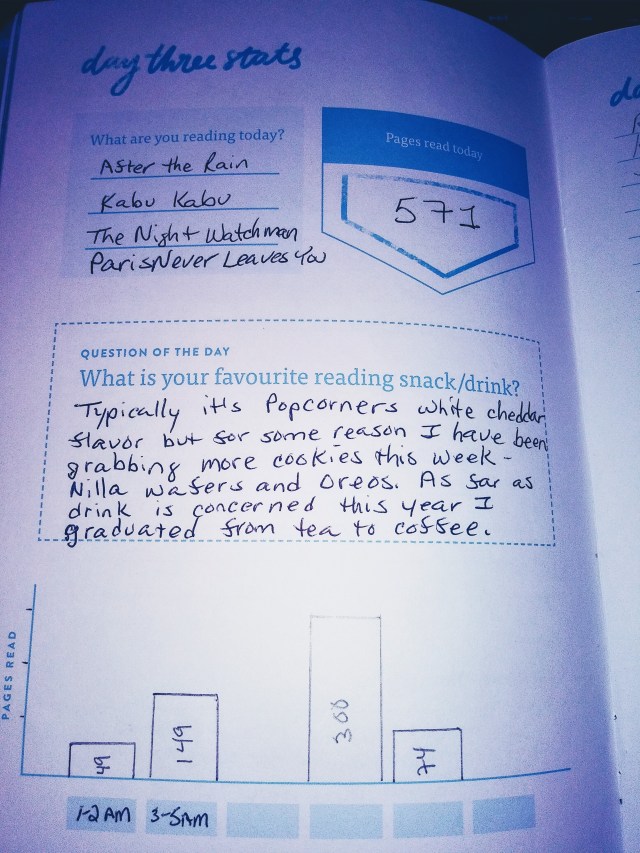
With 571 pages read Day 3 was my most productive day so far!

I decided to switch out His & Hers for the “Read a book entirely outside your house.” The weather has been very uncooperative switching between heat wave and thunderstorm.

Instead, I read the short story “On the Road” and completed Nnedi Okorafor’s graphic novel “After the Rain”.

Rating: 5 out of 5.

I read 49 pages of Paris Never Leaves you during Twitter Sprint.

But as Louise Erdrich’s The Night Watchman was calling my name, I abandoned everything else to finish it.

Rating: 4 out of 5.

Book Review: Underground, Monroe and The Mamalogues

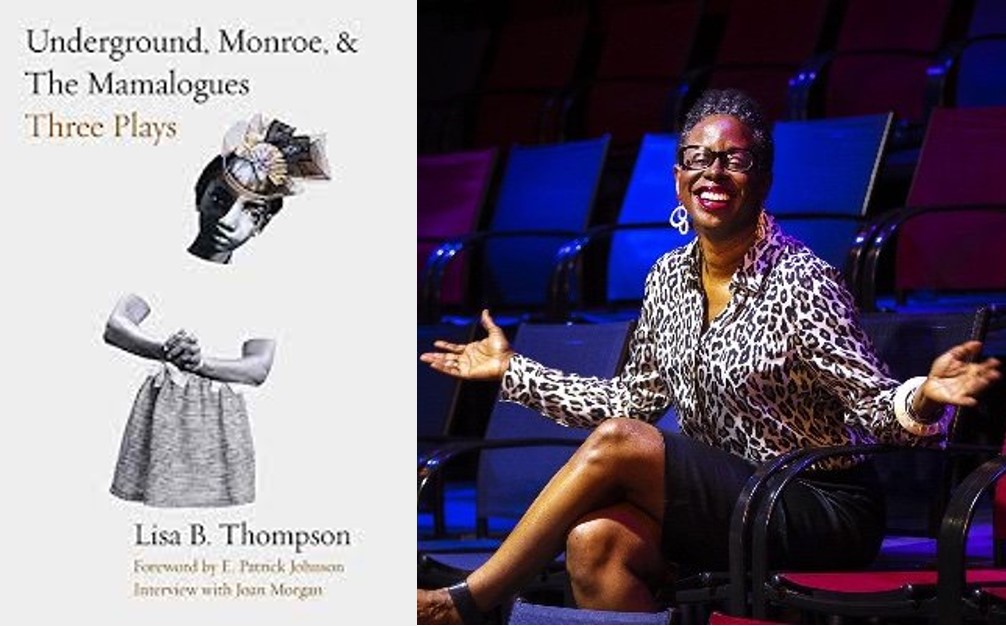
In Underground, Thompson examines masculinity, power, protest and privilege. Kyle surprises “Dix” (Mason) when he shows up uninvited to his hideaway home in upstate New York. From the outset, I was skeptical about the purpose of his visit as Kyle went about furtively going through Mason’s things and taking pictures. He came off as a hustler and I was trying to figure out what game he was running. Slowly their past is revealed, as are Kyle’s motives, and Mason becomes more assertive. Having risen above poverty, he no longer feels that the Black male struggle is his fight. He fought. He won. He’s done.

Monroe is based in part on a real lynching that took place just outside the city of Monroe, Louisiana in 1919. George Bolden*, an illiterate man, was lynched after being accused of writing a letter to a white woman. The play opens up with a community viewing strange fruit hanging from a tree. We get to see the impact on the young man’s loved ones as they cope with the brutality of his death and the terror it instills. His sister Cherry cleaves to her religion while his best friend Clyde makes plans to escape the violence and Monroe.

Of the three plays The Mamalogues was the most humorous and lively. Here Thompson turns her lens onto Black single mothers with the aim of dispelling stereotypes and shedding light on issues of inter-sectionality. To this end, Thompson’s group of mature successful women hold conversations with the audience about traditional views on marriage, ageism, homosexuality, the school-to-prison pipeline, how to train your child to survive being called the N-word and other basics of “parenting while black and living in the age of anxiety”.

The common thread in all of these plays is the Black middle class. Thompson is particularly interested in the costs, as well as the benefits, of class ascension.

*If you would like to read more of George Bolden’s story, it is featured in the book Lynching in America: Confronting the Legacy of Racial Terror.

My Reading Rush Journal

What was the hardest challenge you’ve ever done for a read-a-thon?

My hardest challenge was to read a book about a podcast. At that time I had not heard of any books with podcasts in them although I did enjoy listening to Serial at work. In the end I read Six Stories by Matt Wesolowski which is comprised of six episodes in the manner of Serial. Each episode tells another character’s side of the story, removing layer by layer the mystery surrounding the death of Tom Jeffries.

I have since read several books with podcasts that I enjoy.

Two sisters – one dead, one missing – and a radio personality obsessed with finding her before it is too late. Sadie was one of the best reads for me in 2018. Since reading this book I started picking up Courtney Summers other titles and I have yet to be disappointed. If you would like to listen to the podcast “The Girls” featured in the novel just click the link.


Rachel Krall is the host of “Guilty or Not Guilty” a true crime podcast that asks the listener to be the judge. Her first season ended up in a conviction reversal for a man accused of rape. Now Rachel’s attention is focused on the high profile rape case of a rising star athlete bound for the Olympics. The small town of Neapolis is divided. Half believe the teenage girl. The other half feel as if she saw is trying to bring their golden son down. Either way no one really seems to want Rachel in town. That is besides the woman who has been surreptitiously leaving her notes about a death that occurred 25 years ago.

The Night Swim was a fast paced read that delved into society’s view on rape, consent and how we judge our victims and perpetrators.

This was my first completed book for Reading Rush 2020.

Book review: The Long Call

Synopsis

For the first time in 20 years, Ann Cleeves –international bestselling and award-winning author of the Vera and Shetland series, both of which are hit TV shows– embarks on a gripping new series.
In North Devon, where two rivers converge and run into the sea, Detective Matthew Venn stands outside the church as his father’s funeral takes place. Once loved and cherished, the day Matthew left the strict evangelical community he grew up in, he lost his family too.

Now, as he turns and walks away again, he receives a call from one of his team. A body has been found on the beach nearby: a man with a tattoo of an albatross on his neck, stabbed to death.

The case calls Matthew back into the community he thought he had left behind, as deadly secrets hidden at its heart are revealed, and his past and present collide.

An astonishing new novel told with compassion and searing insight, The Long Call will captivate fans of Vera and Shetland, as well as new readers.


Review

“. . . he could hear the surf on the beach and the cry of a herring gull, the sound naturalists named the long call, the cry which always sounded to him like an inarticulate howl of pain.”

With these words Ann Cleeves sets the scene for her first book in the Two Rivers series. When I read these words I thought myself clever. I thought it was a clue to who the killer was. Silly me. I had duped myself. But these words do foreshadow what is to come. The characters in The Long Call have gone through indescribable pain. — The guilt over having caused the death of an innocent. Rejection and loss of family because of sexual orientation. The list goes on. — Yet in this world most hold their secrets dear. They are not always kept to hide shame or escape retribution. For some secrets represent freedom, independence, being grounded in your own truth. “He was so sympathetic that she was almost tempted to confide in him. To confess. But she’d grown up thinking that secrets were sometimes all she had, so she just shook her head.” “We all need secrets, just to keep sane, to feel that the world doesn’t own us.”

In the end I did not find myself drawn to the character of Matthew Venn as much as I thought I would. As a married gay police detective who grew up in a fundamental evangelicals sect Venn is a totally original character. I should have been intrigued. But I do not fault the book for this. I found Cleeves to be a skillful and insightful writer. Maybe I have an albatross tattooed on my neck. For the life of me I am struggling to focus. Reading is typically my outlet but in these times my anxiety is ramped up in high gear. A book that would normally take me 6 or 7 hours to read is now taking days. All in all, I would like to revisit Cleeves’s work after this crisis has passed.

Special thanks to Minotaur Books for access to this work.


About the Author

From her webpage: “Ann Cleeve’s books have been translated into twenty languages. She’s a bestseller in Scandinavia and Germany. Her novels sell widely and to critical acclaim in the United States. Raven Black was shortlisted for the Martin Beck award for best translated crime novel in Sweden in 2007. It has been adapted for radio in Germany – and in the UK where it was a Radio Times pick of the day when it was first broadcast Radio adaptations of Raven Black and White Nights have both been repeated. Ten series of Vera, the ITV adaptation starring Brenda Blethyn, have been shown in the UK and worldwide, and series eleven was due to begin filming in April 2020, although this has been delayed because of the coronavirus; there have also been five series of Shetland, based on the characters and settings of her Shetland novels, and another two have been confirmed.”

“Do you believe that art is a dangerous illusion?”

Self-Portrait with Boy

Self Portrait With Boy by Rachel Lyon

“Do you believe that art is a dangerous illusion, that art obscures truth? — or do you allow that by witnessing art the viewer experiences catharsis?”

Lu Rile’s answer to this question was “I don’t believe there is any relationship between art and morality.”  As a young photographer yearning to be recognized Lu Rile is is barely scraping by.  Squatting in an artists’ residence she makes do by stealing food from the health food store where she works.  Socially awkward and reclusive the only support system she can count on is her ailing father.  While working on a series of self portraits, she stumbles upon her “accidental masterpiece” when she inadvertently captures her neighbor’s son falling to his death.  The juxtaposition of her flying against him falling for her is the perfect rendition of failure — flying as a “constant negotiation” between resisting the currents that weigh us down and adapting as we fall.  Despite her answer to this question, she cannot get past the morality issue.  Although she wants acclaim for her work, a part of her knows it is wrong to put this portrait on display when she is now becoming friends with the mother of the deceased boy.  Yet she still earnestly pushes for it to be showcased.  She evades her dilemma and loses sight of the bigger picture — that Kate has lost her only son.  Lu cannot seem to wrap her head around the fact that seeing his death captured in the moment would utterly devastate her.  She keeps telling herself that Kate would see the beauty in her art.  Self Portrait with Boy takes you through Lu’s inner turmoil and asks what is the purpose of art.  Is it to stir you out of your complacency?  Is it to comfort the troubled mind?  At what point do we forsake morality and kinship for beauty?